Santiago Roma
Ribadumia • Val do Salnés - Rías Baixas • Galicia
Location:  Galicia, Spain
Village: Ribadumia
Appellation: Rías Baixas-Salnés
Climate: Temperate maritime climate influenced by the Atlantic Ocean
Elevation: 100m - 120m
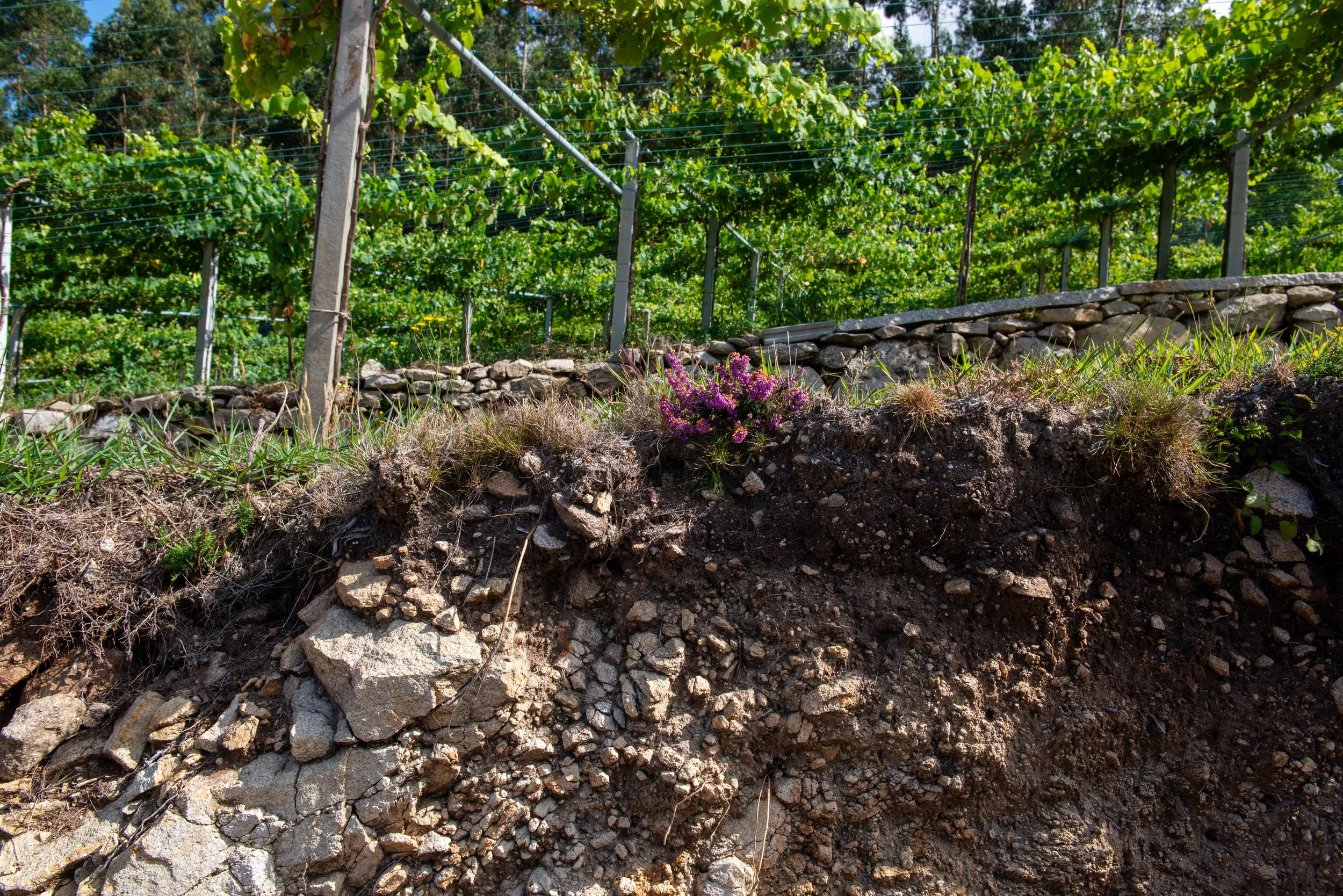
Soils: Decomposed granite with a friable, sandy-loam texture with good drainage known as xábre
Vineyards: 12Ha
Farming: Organic
Varieties: Albariño
Cellar: Hand harvesting, free run juice, native yeasts and spontaneous fermentations in inox and granite
Proprietor: Santiago Roma Martínez
Viticulture: Santiago Roma Martínez
Winemaker: Santiago Roma MartínezLocated in the historic heart of the Val do Salnés, facing the Ría de Arousa in Galicia’s Rías Baixas, Santiago Roma works in a landscape shaped as much by the Atlantic Ocean as by the land itself. From a restored nineteenth-century granite farmhouse outside the village of Ribadumia, Santiago farms Albariño across a collection of small vineyards, combining generations of inherited knowledge with an unique instinct for observation, reflection, and continual refinement.
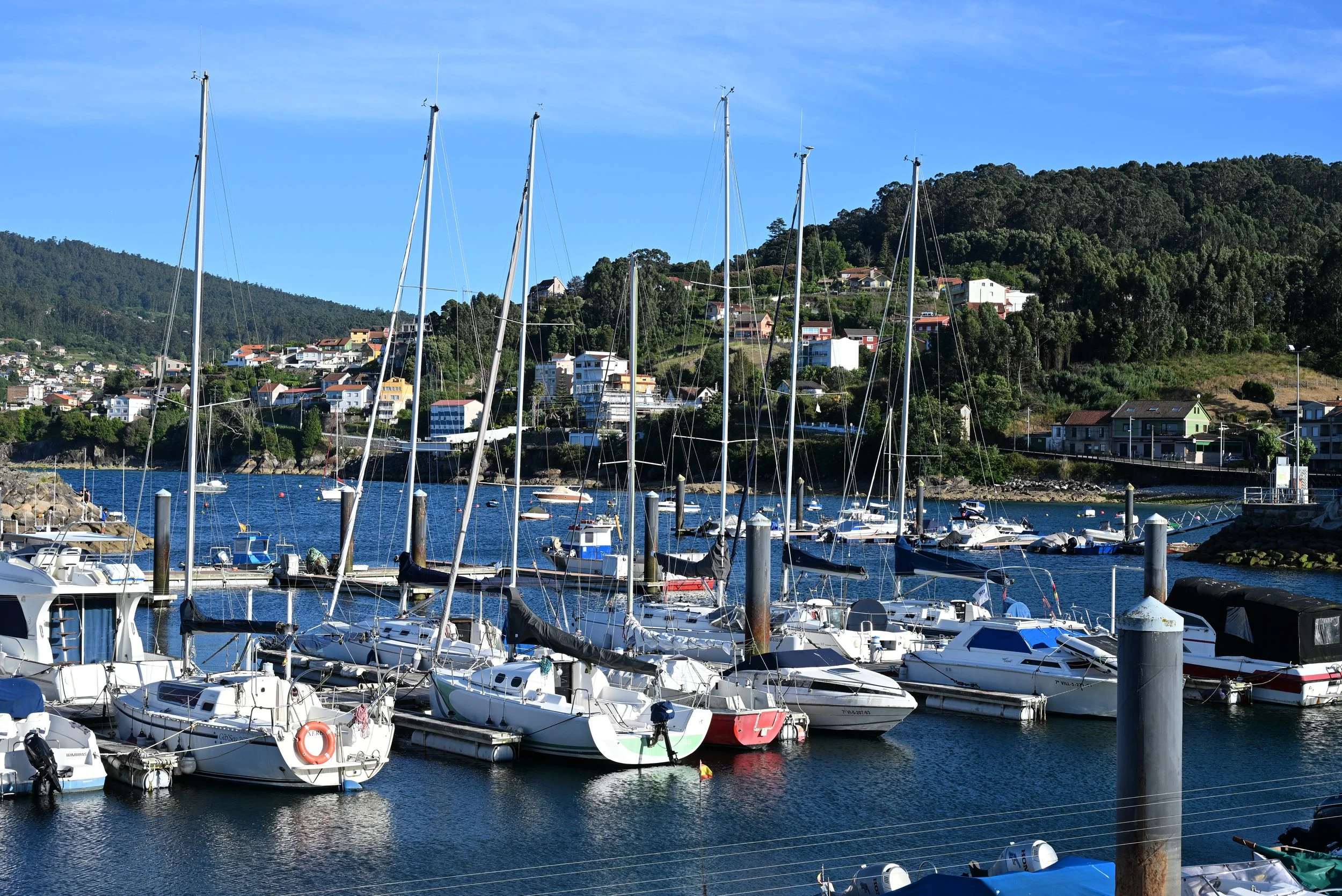
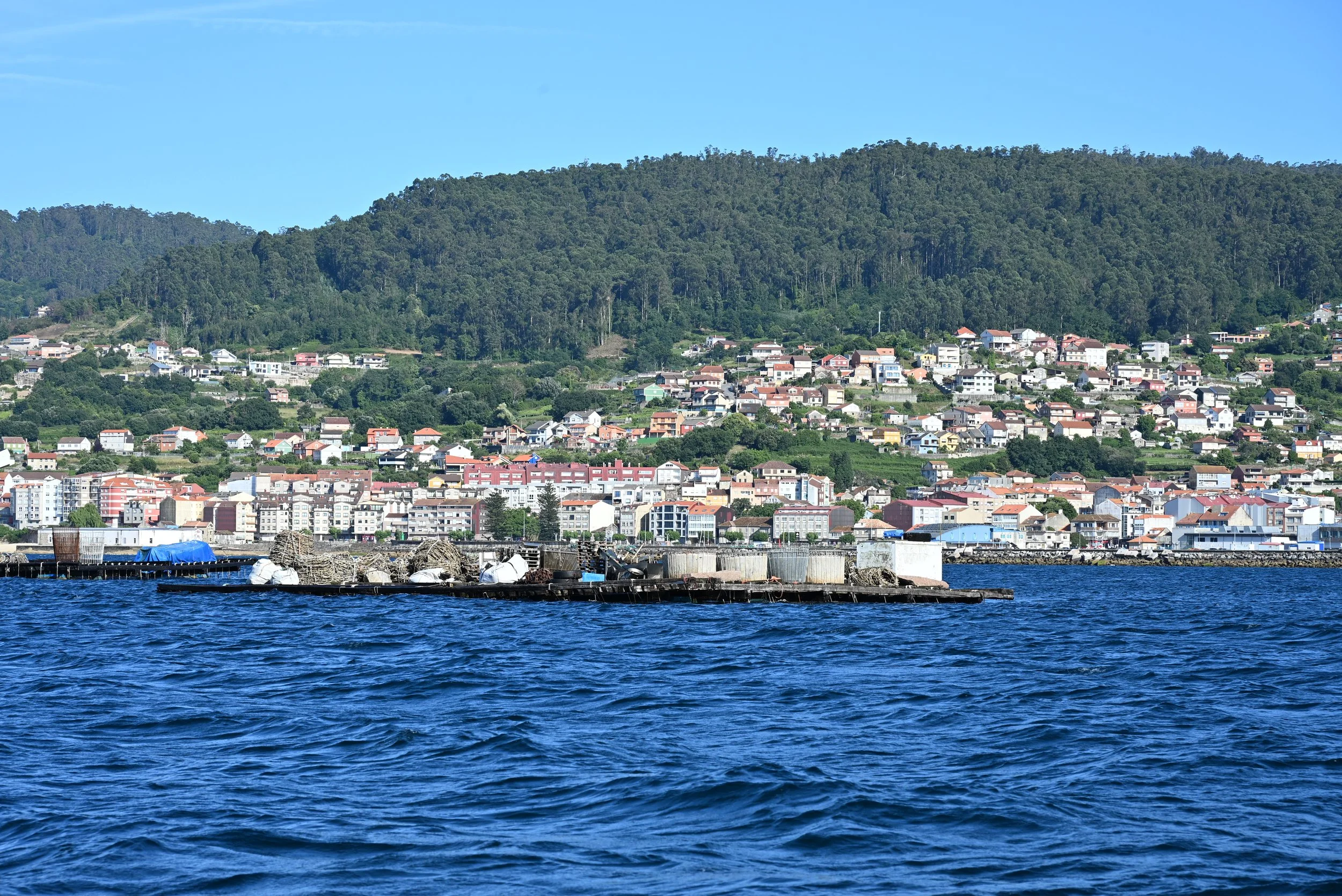
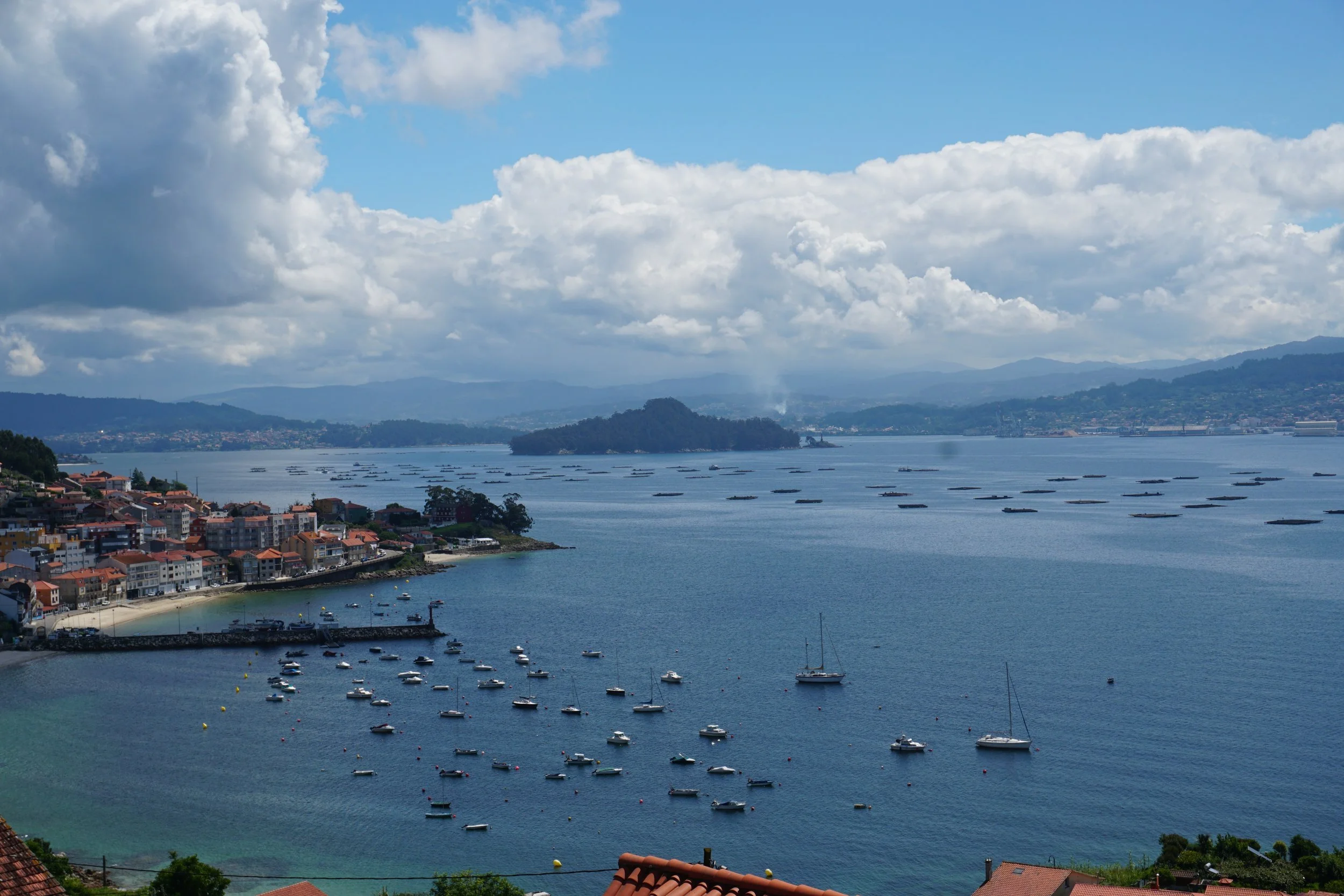
Rías Baixas occupies the dramatic green coast of northwestern Galicia, where the Atlantic pushes deep into the landscape through a succession of jagged estuaries known locally as rías. The name Rías Baixas, or “lower rías” in Galician, refers to five principal estuaries: the Ría de Muros y Noia, Ría de Arousa, Ría de Pontevedra, Ría de Vigo, and Ría de Miño, extending roughly 90 miles south of Santiago de Compostela toward the Portuguese border. Here fresh and salt water converge, supporting extraordinarily rich marine ecosystems and a seafood culture that forms the backbone and identity of the region.
The Val do Salnés occupies the northern half of Rías Baixas and surrounds the historic town of Cambados. Surrounded by water on three sides and possessing more coastline than any of the denomination’s other subzones, it is the coolest and wettest part of Rías Baixas, with an average temperature of approximately 55°F. It is also the denomination’s original and oldest subzone, with the greatest area under vine and its highest concentration of wineries. The name Salnés itself derives from the salt flats that once covered parts of the landscape.
This is emphatically Atlantic wine country. Rías Baixas receives approximately three times the national average annual rainfall, moderated by constant ocean breezes and more than 2,200 hours of annual sunshine. The combination allows Albariño to ripen fully while retaining the medium-to-high natural acidity and aromatic intensity for which the variety is known. Small differences in elevation, orientation, rainfall, fog, and exposure can create markedly different growing conditions over very short distances.
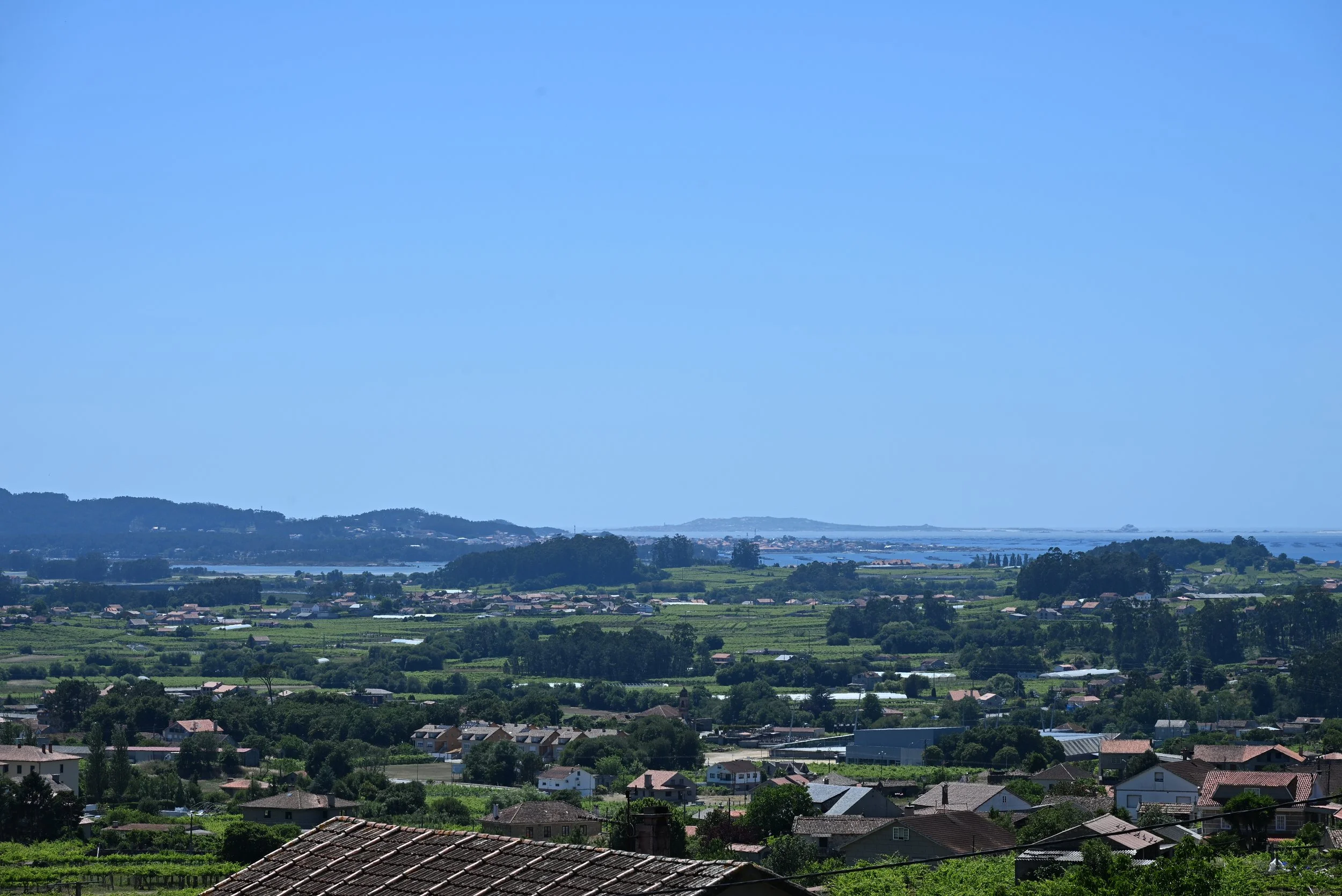
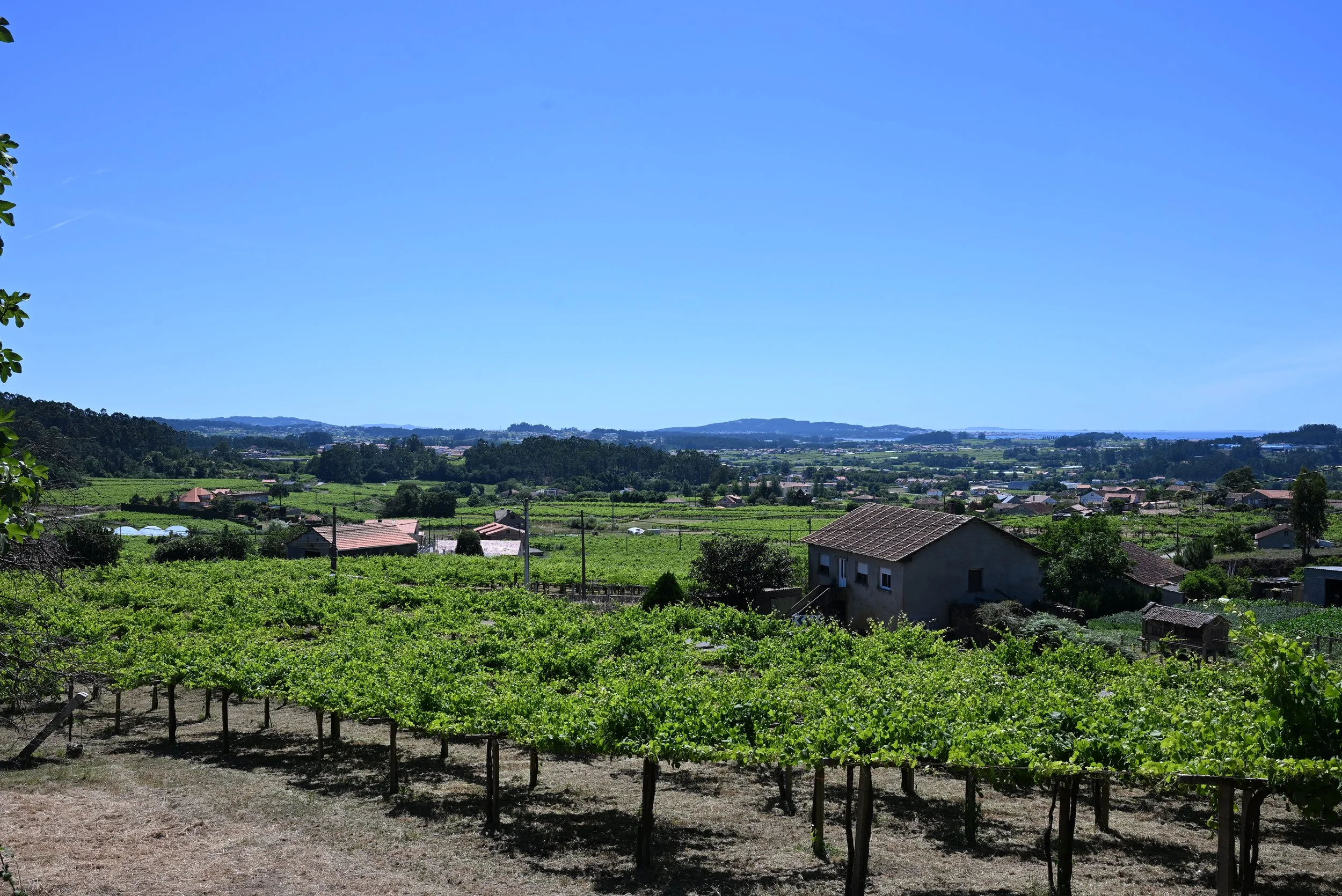
Around Ribadumia, those climatic influences meet granitic soils locally known as xábre, decomposed granite with a friable, sandy-loam texture. The high porosity provides essential drainage in such a wet climate while retaining enough moisture to sustain the vines during warmer, drier periods. Santiago’s vineyards are in the higher area of Ribadumia away from the river around 120 meters above sea level and receive protection from the hills around the valley, while morning fog from the Ría de Arousa, just 5km away, is pushed inland toward the higher sites. The combination of ventilation, drainage, and maritime humidity allows the vines to remain hydrated without the excessive moisture that can encourage mildew, unwanted vigor, and uneven phenolic ripening.
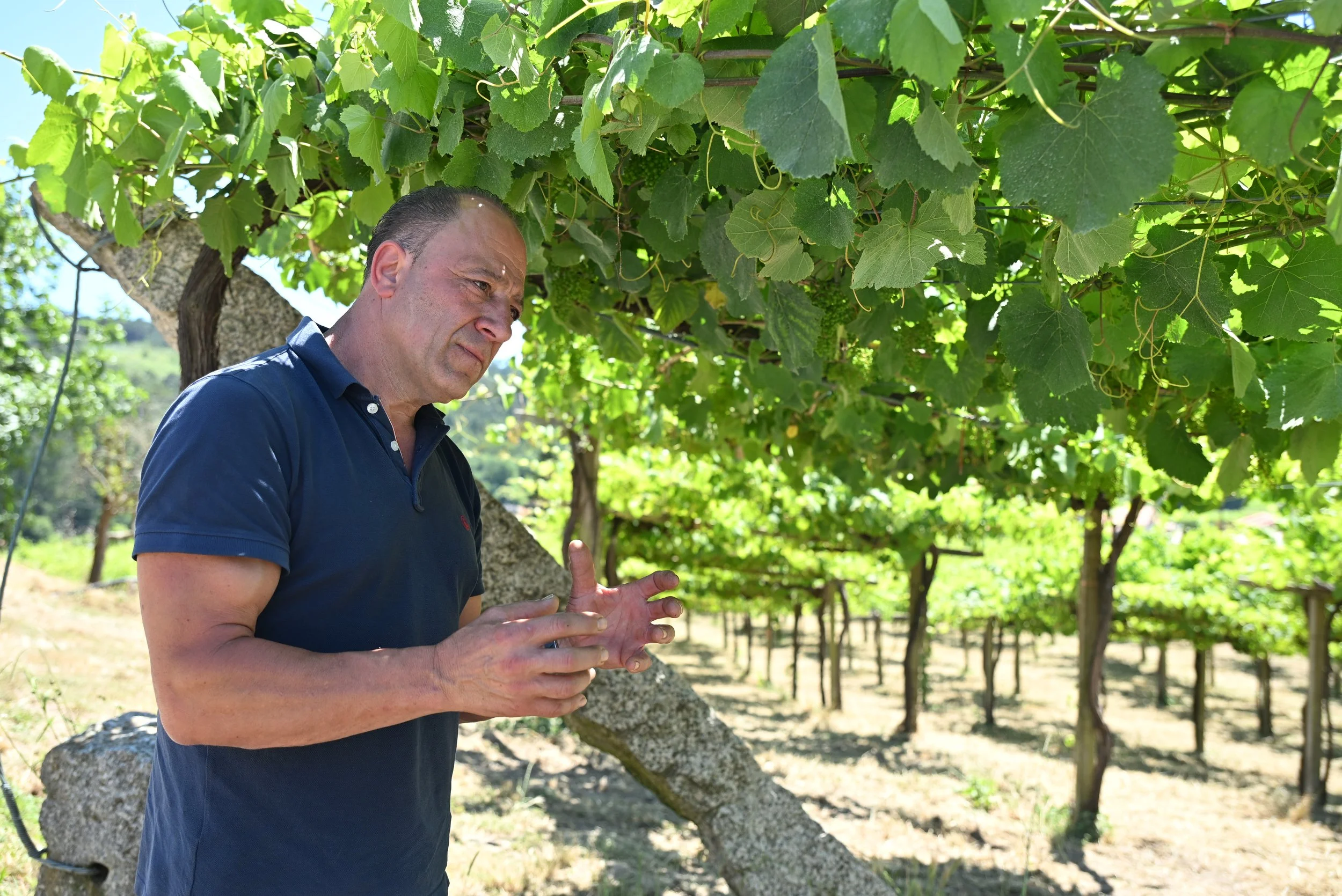
These conditions are central to the character Santiago seeks in his wines: freshness and aromatic clarity, but also texture, salinity, balanced acidity, and the capacity to evolve in bottle.
Santiago’s connection to this landscape predates the winery that bears his name. His family has cultivated grapes here for generations, and he represents the third generation of viticultors in his family to make wine, originally for their own consumption. He grew up on a working farm where vineyards and winemaking were part of everyday life. Some of his earliest memories of harvest involve stomping grapes barefoot as a child.
As he grew older, Santiago sought formal training in viticulture, oenology, and cultivation techniques to complement what he had absorbed at home. His ambition was never to discard the knowledge passed down through his family, but to understand it more deeply: to show that a small family winery could evolve through education, research, and experimentation without severing its connection to its origins.
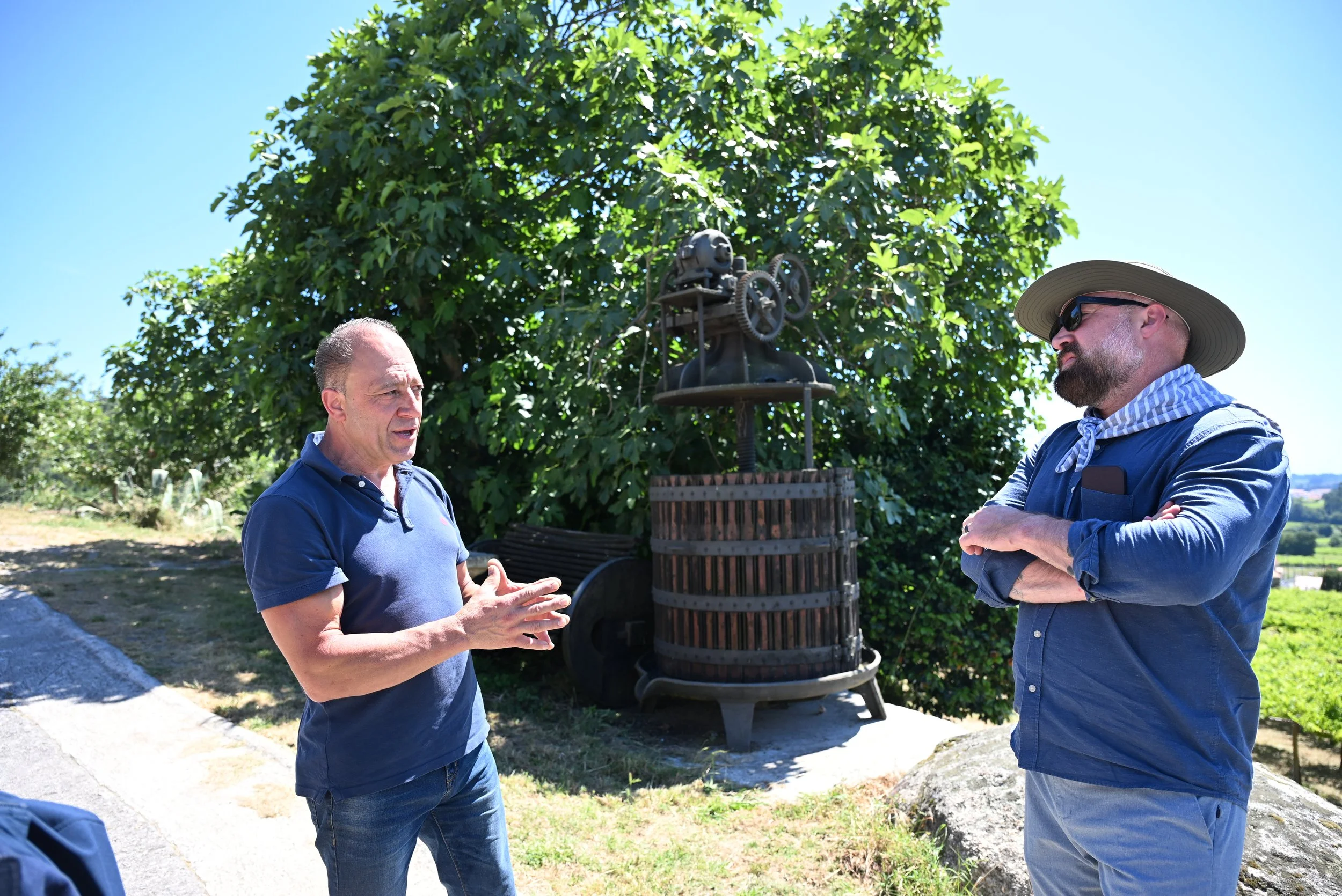
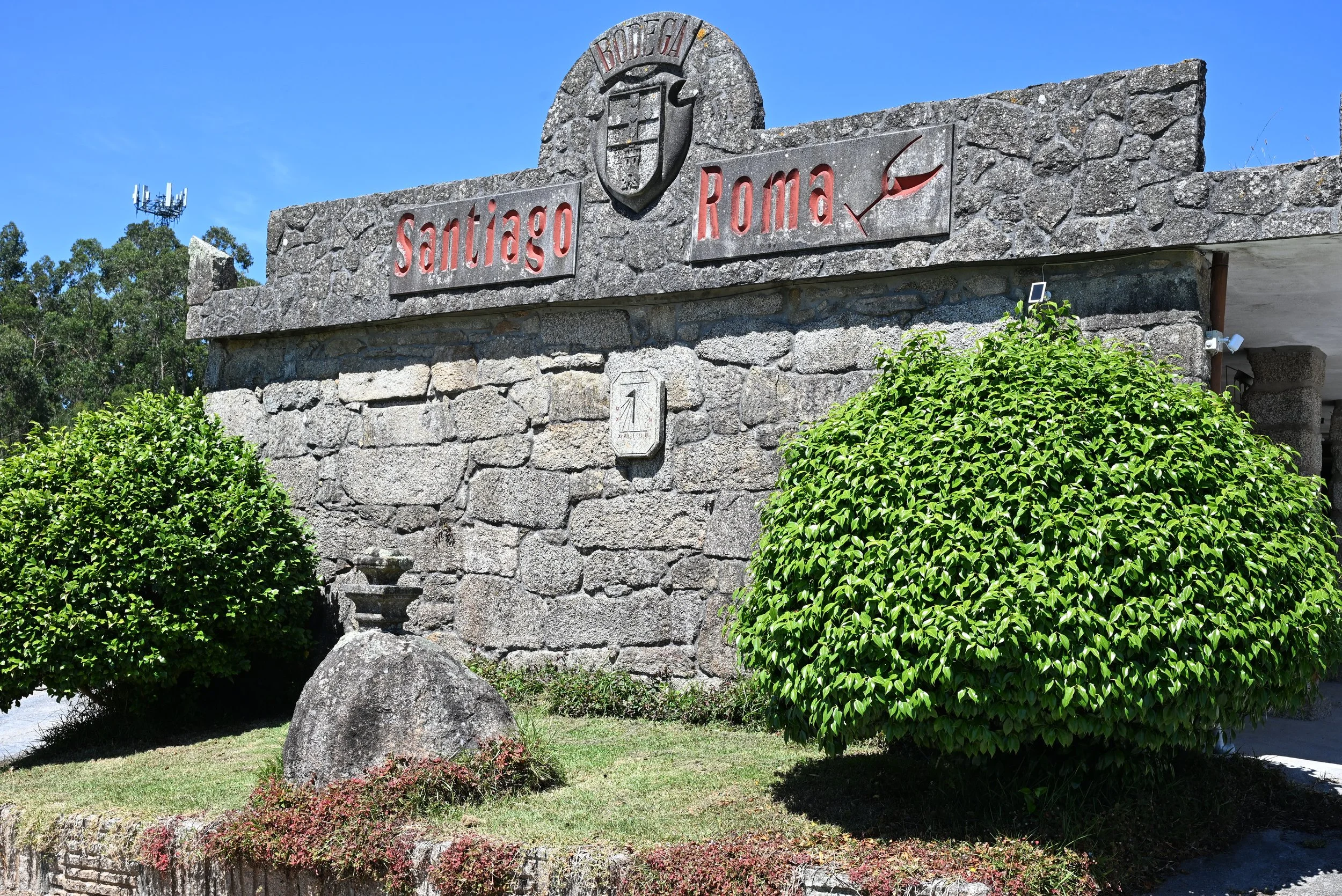
In 1997, he began bottling wine under his own name. The project is based at La Casa de Martís, an old farmhouse built from local granite in the 1800s that once belonged to Santiago’s great-great-grandparents. Restored as the family winery, it sits among the vineyards near Ribadumia and remains the physical and emotional center of his work.
Today Santiago farms 12 hectares of Albariño divided among numerous small parcels throughout the Val do Salnés. Six hectares are estate-owned and another six are held under long-term contracts and farmed by Santiago, a structure characteristic of a region historically divided into minifundios, or tiny family smallholdings. Rather than large contiguous estates, the landscape is a mosaic of fragmented vineyards, each with its own exposure, orientation, elevation, and relationship to the Atlantic.
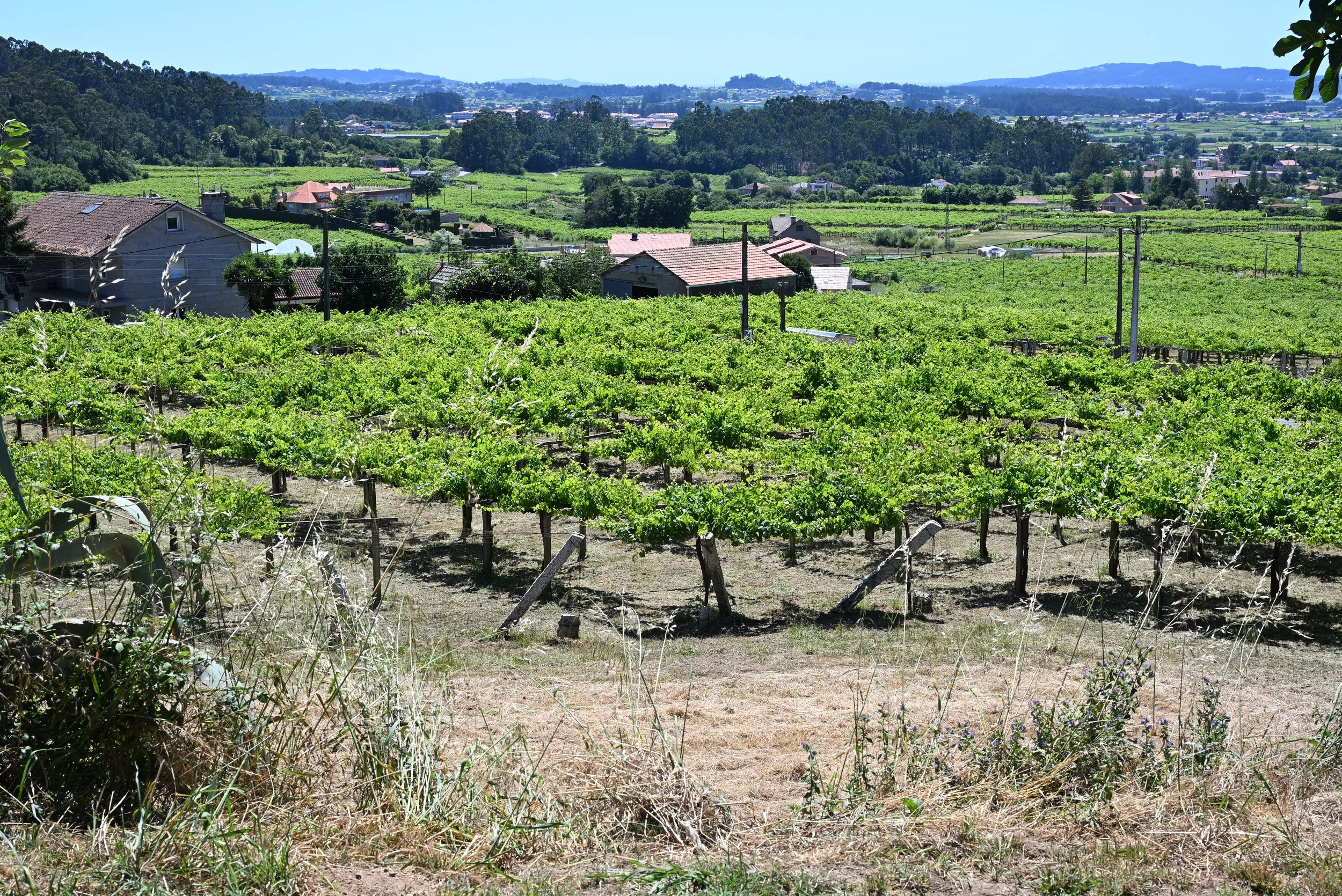
The vines average approximately 40 to 50 years of age, with some parcels being older and others younger. The oldest vineyards surround the winery itself on a small hill around 120 meters above sea level, aligned toward the Ría de Arousa and the Atlantic Ocean approximately five kilometers away. From this position much of the Salnés Valley unfolds below, making the relationship between vineyard, estuary, hills, and ocean immediately visible.
Santiago remains first and foremost a viticultor. He farms according to non-certified organic practices and avoids herbicides, emphasizing the health of the soil and its microbiological life as the foundation for healthy vines. Sheep, chickens, and geese are integrated into the vineyards to help manage grasses and pests naturally. Treatments are limited to environmentally conscious products using natural or biological active ingredients, including plant oils, microbes, and minerals, selected to protect the vines while breaking down rapidly in the environment and limiting harm to beneficial insects.
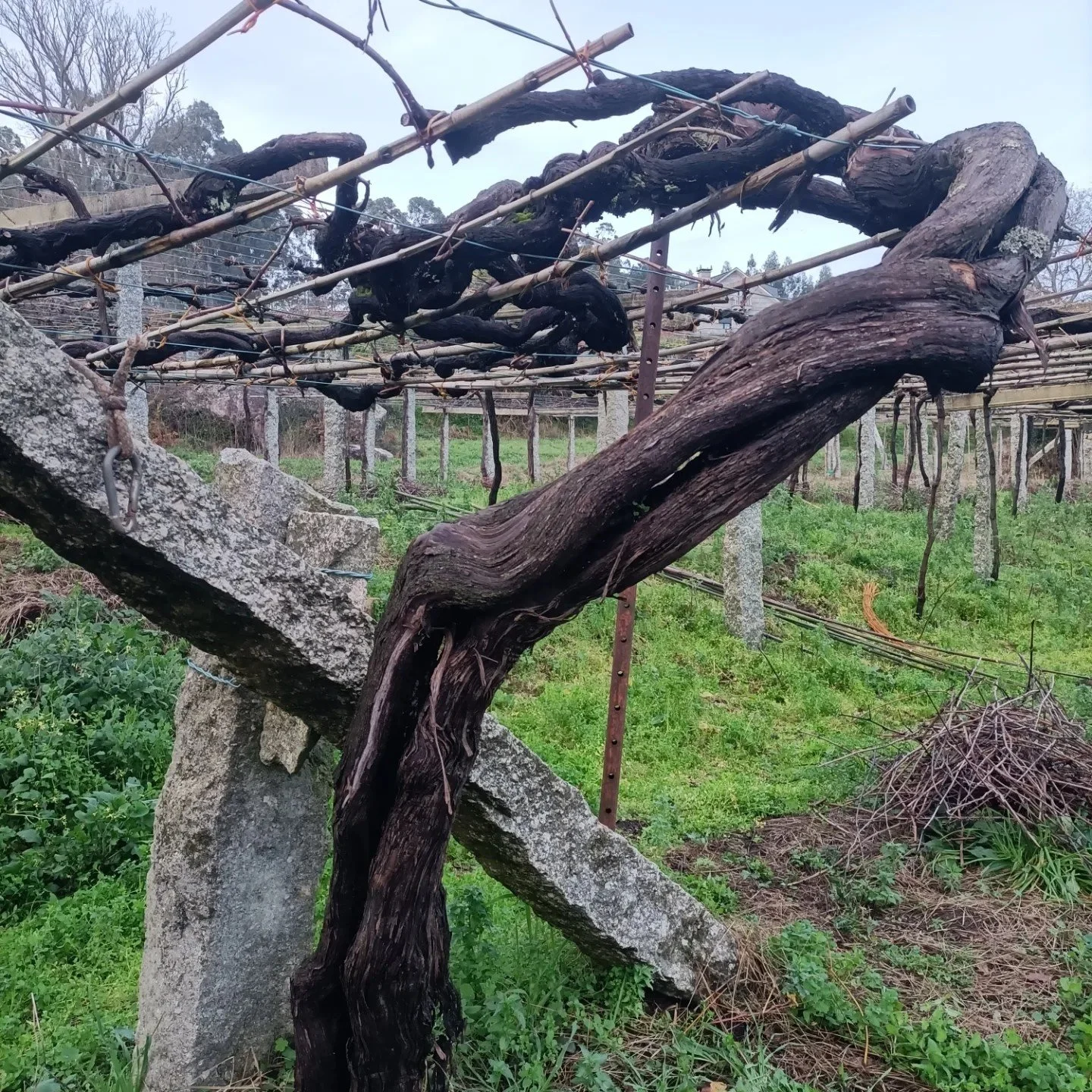
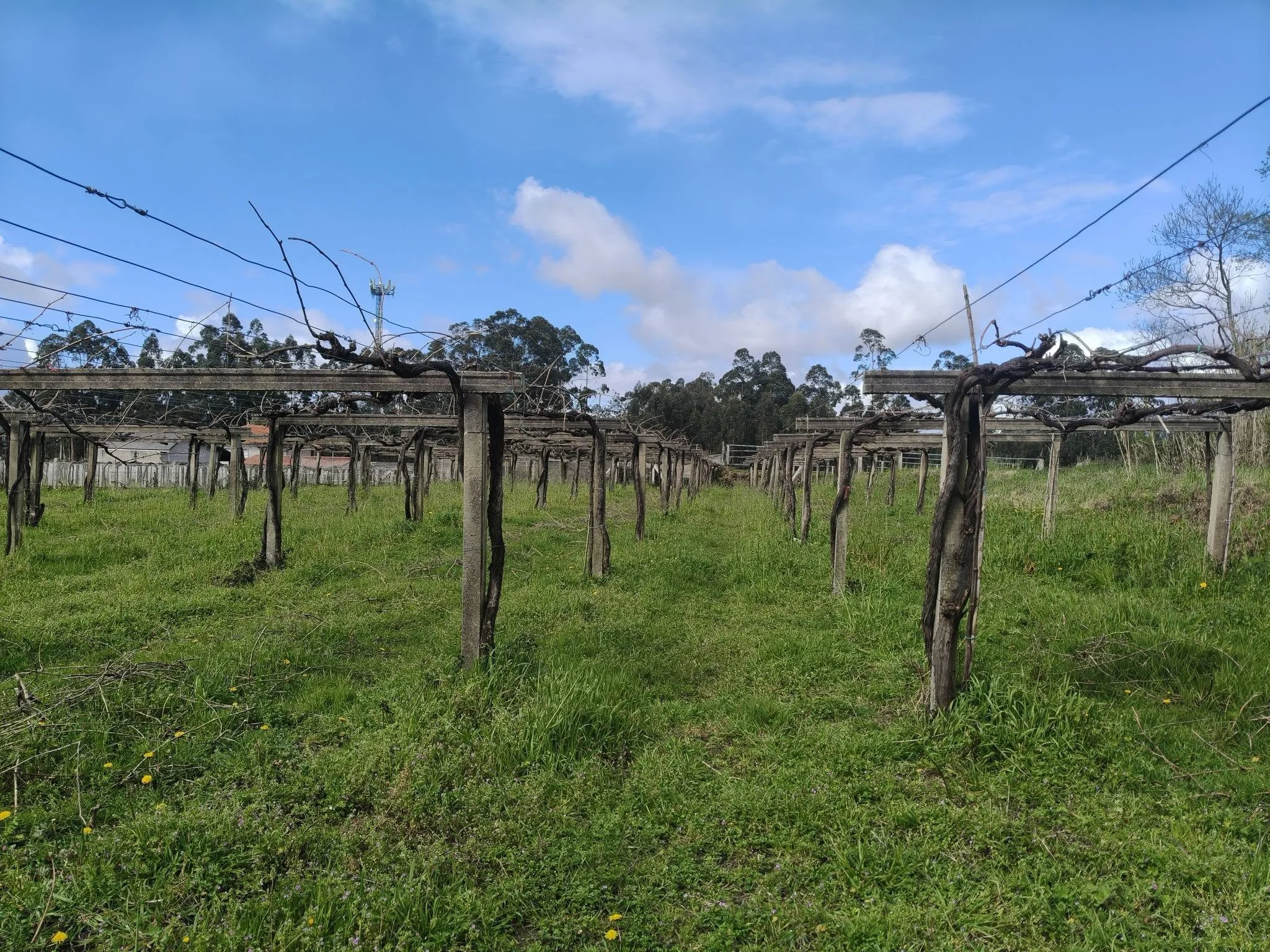
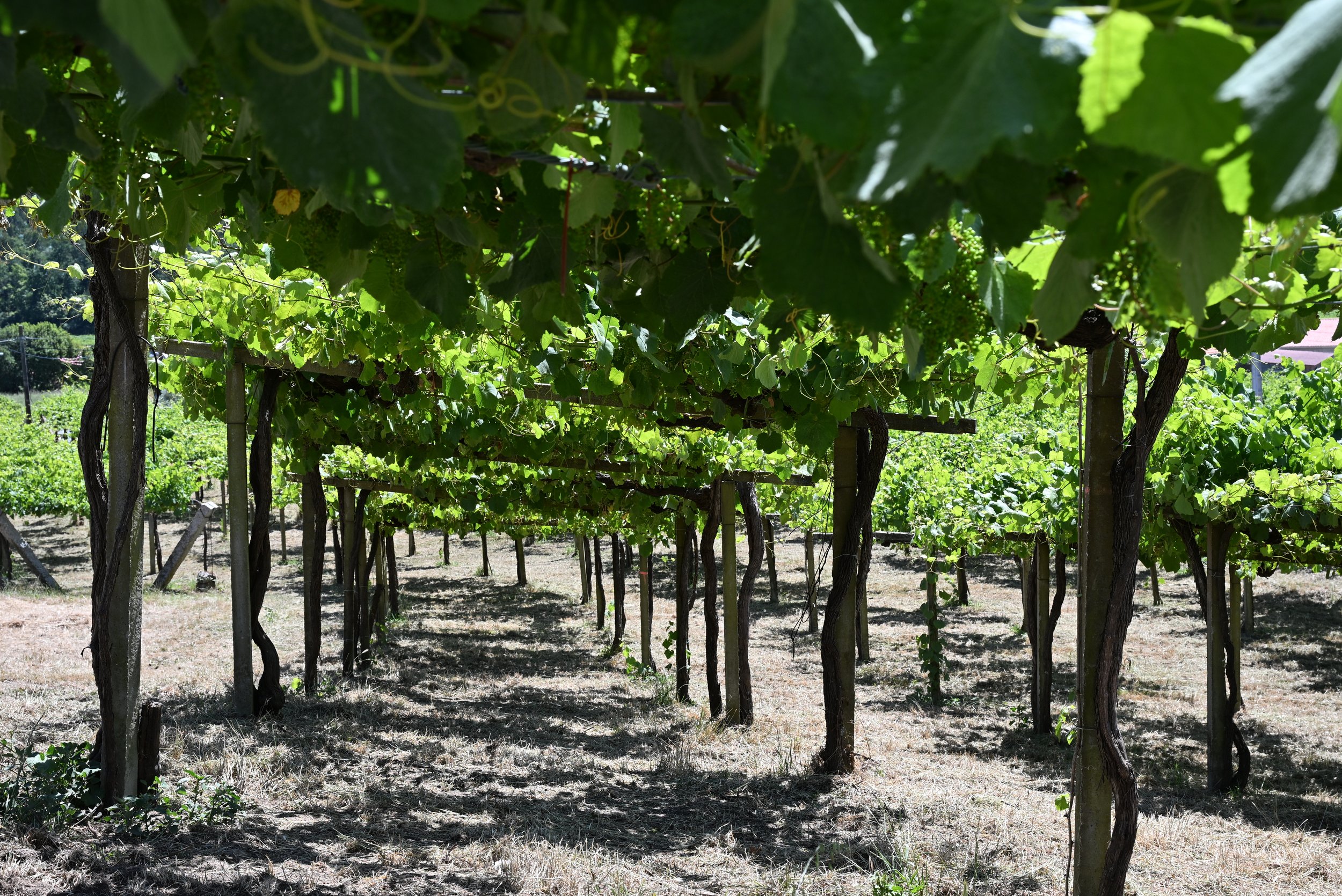
The vineyards retain the traditional emparrado, or parra, pergola system characteristic of the region. Vines are widely spaced and elevated on trellises supported by granite posts hewn from the same stone that lies beneath them. Reaching as high as seven feet, the pergolas lift the canopy away from the damp ground and expose it to Atlantic breezes, maximizing circulation and helping reduce mildew pressure while encouraging even ripening. Santiago employs Guyot pruning with eight buds and an average of six productive shoots per vine, obtaining yields of approximately 8,000 kilograms per hectare in these sandy-loam soils.

For Santiago, the height, orientation, and exposure of Albariño are fundamental to achieving healthy, even ripening. The porous soils also help the vines manage periods of summer heat and water stress, contributing to the balance of acidity and the development of phenolic maturity in the grapes.
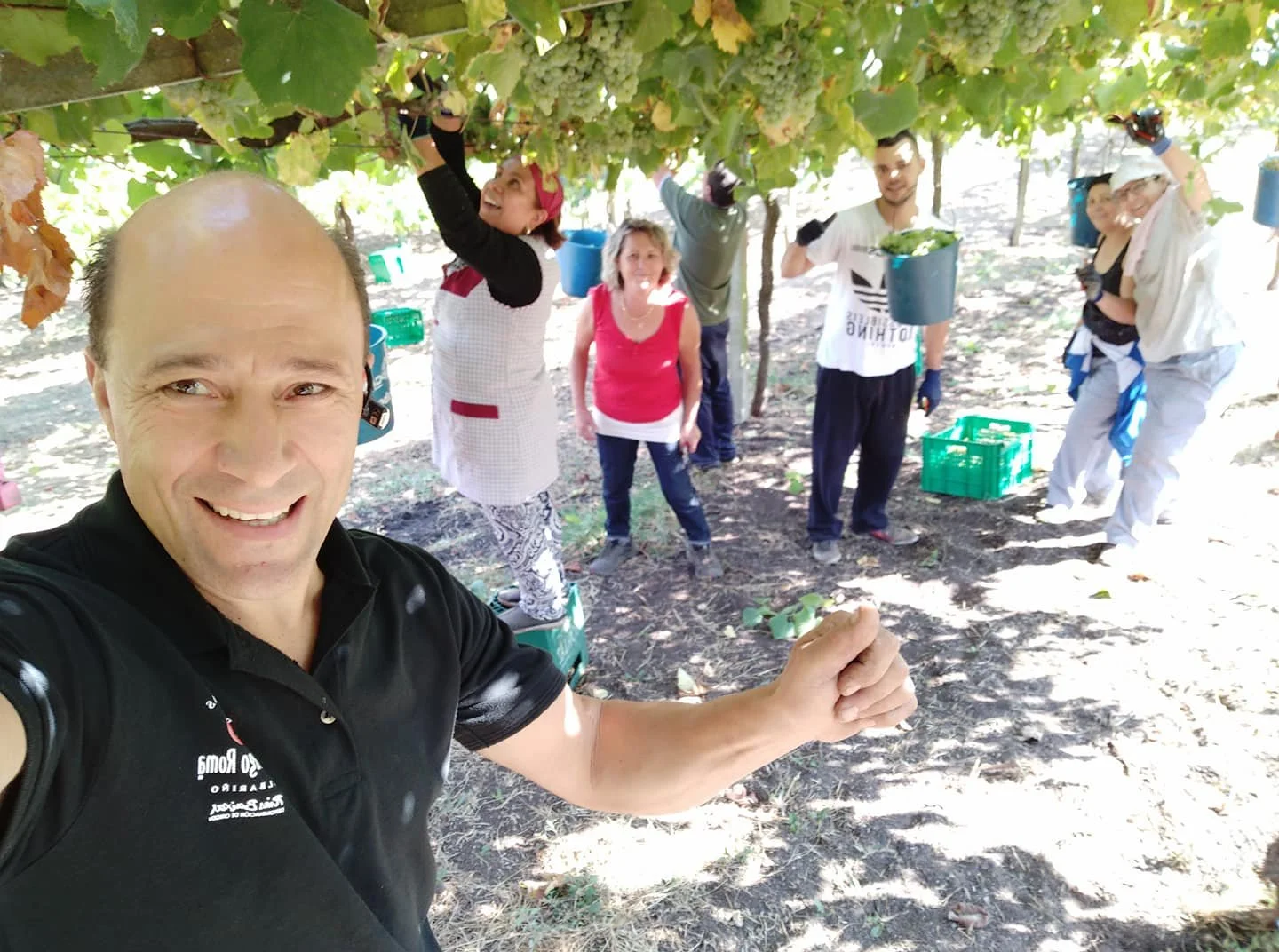
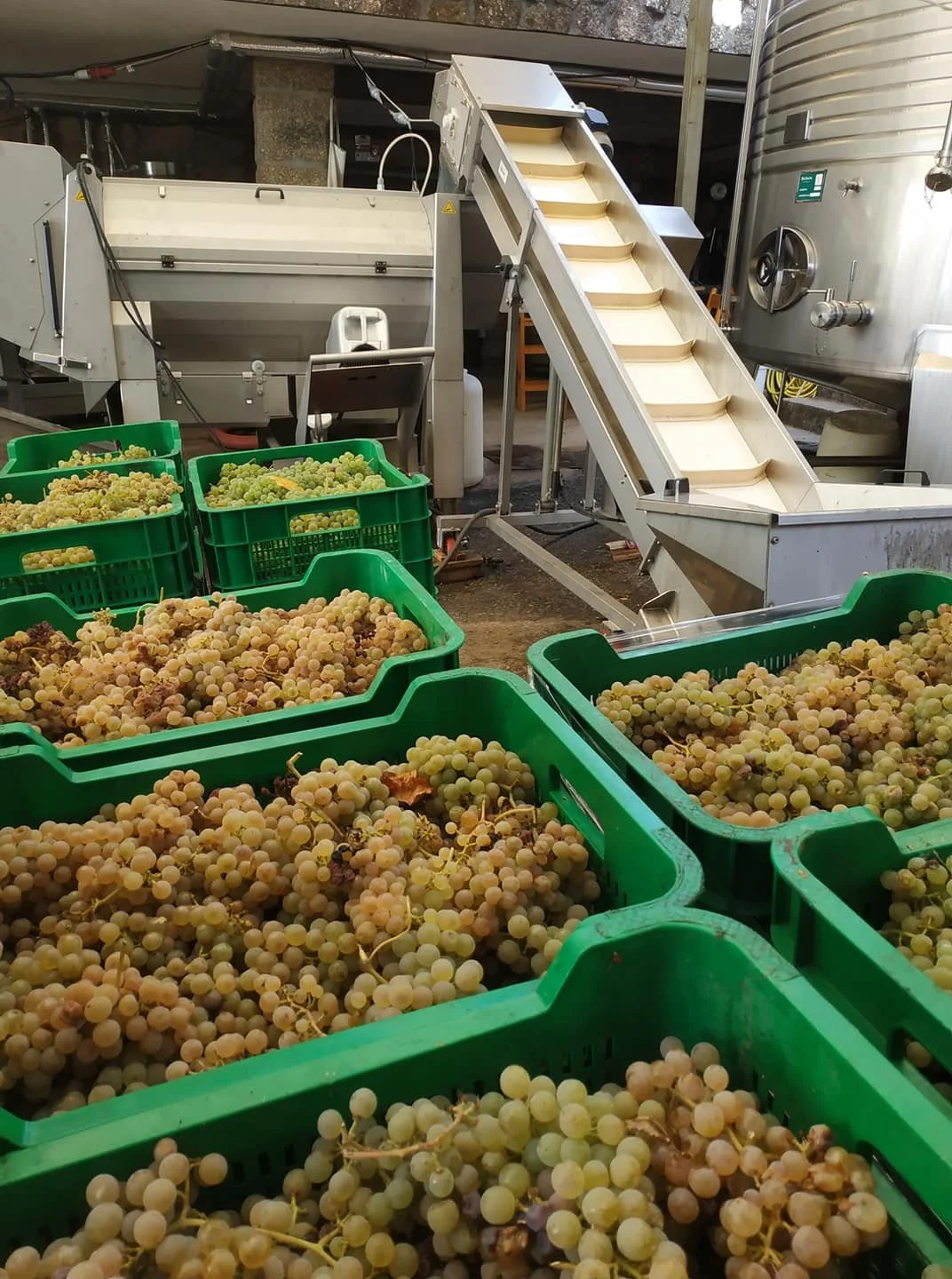
Harvest is entirely manual. Each plot is picked individually, bunch by bunch, into small crates to protect the integrity of the fruit. Because Santiago’s vineyards lie close to the winery, transport times remain short, allowing the grapes to arrive with maximum freshness.
This degree of attention carries directly into the cellar, where Santiago’s approach is precise but deliberately unembellished. Grapes are destemmed on arrival and moved directly to a pneumatic press, where they are pressed cold at low pressure and temperature. The resulting must is allowed to settle before fermentation.
Fermentations occur primarily in stainless steel and are spontaneous, using the native yeasts naturally present on the grapes and collected in the sediment of the tanks. Partial malolactic fermentation may occur depending upon the vintage and the character of the fruit, converting some sharper malic acid into softer lactic acid rather than imposing a predetermined formula every year. The wines remain on their lees for several months to develop texture and complexity. They are unfined, cold-stabilized using refrigerated isothermal stainless-steel tanks, and are vegan-friendly.
The goal throughout is not to standardize Albariño, but to preserve difference. Santiago wants each vintage to register its particular rainfall, sunlight, temperature, and the microclimatic distinctions that occur across his fragmented vineyards. He intervenes where necessary, but his winemaking is built around the premise that the essential work has already happened outside.
As Santiago explains:
“What makes us unique isn't just a single technique, but a philosophy based on respect, observation, purposeful innovation, and a constant quest for wines that authentically express the landscape and personality of Rías Baixas.”
All of Santiago Roma’s Val do Salnés wines are produced from 100% Albariño, an important distinction for Santiago because of his desire to give an unambiguous expression of the variety and its granitic xábre soils.
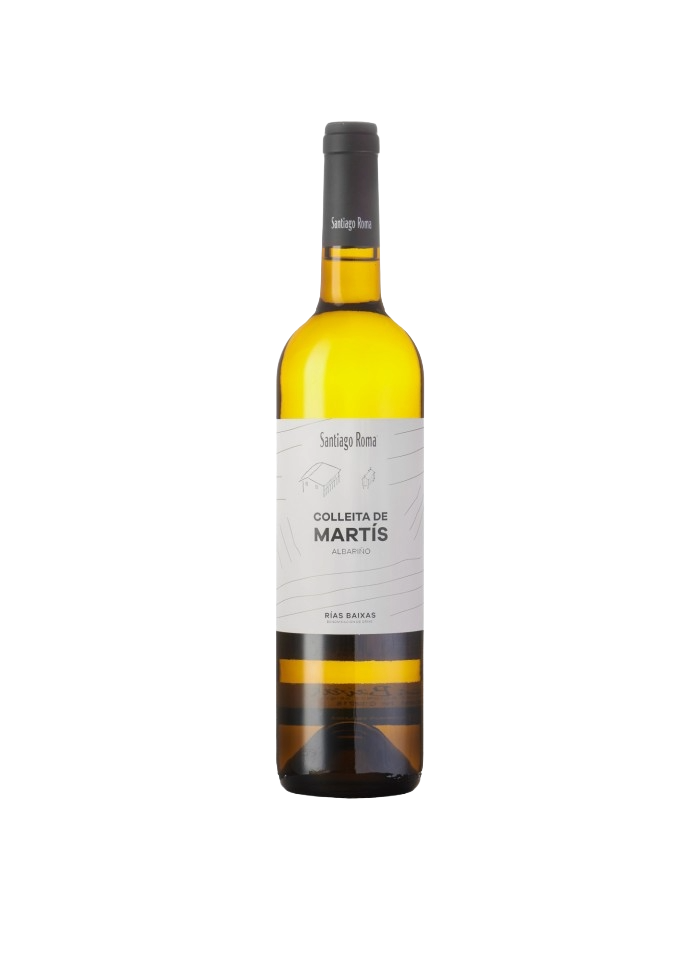
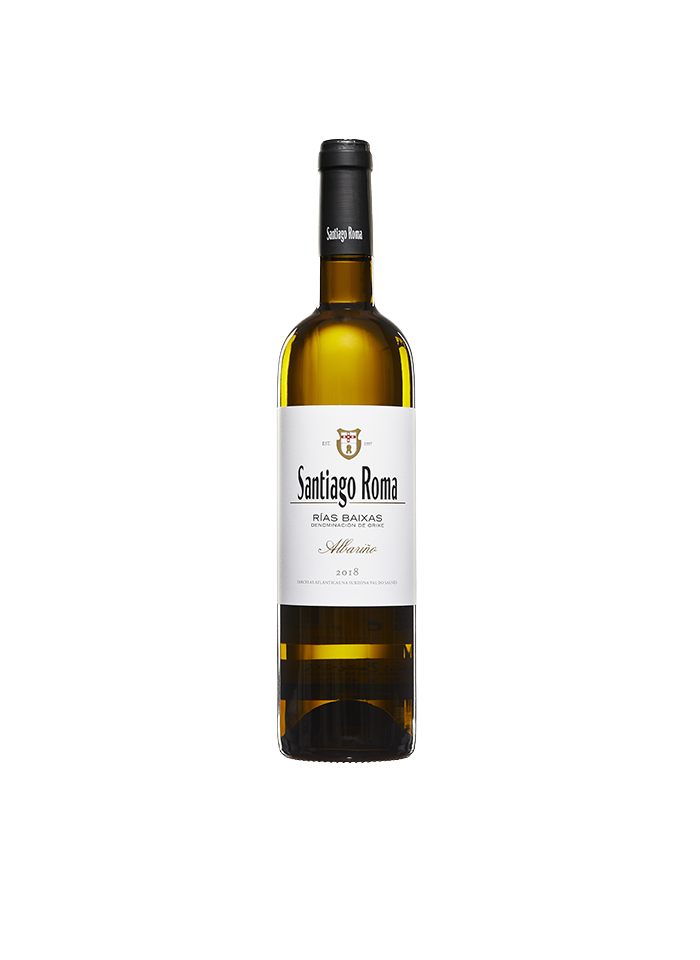
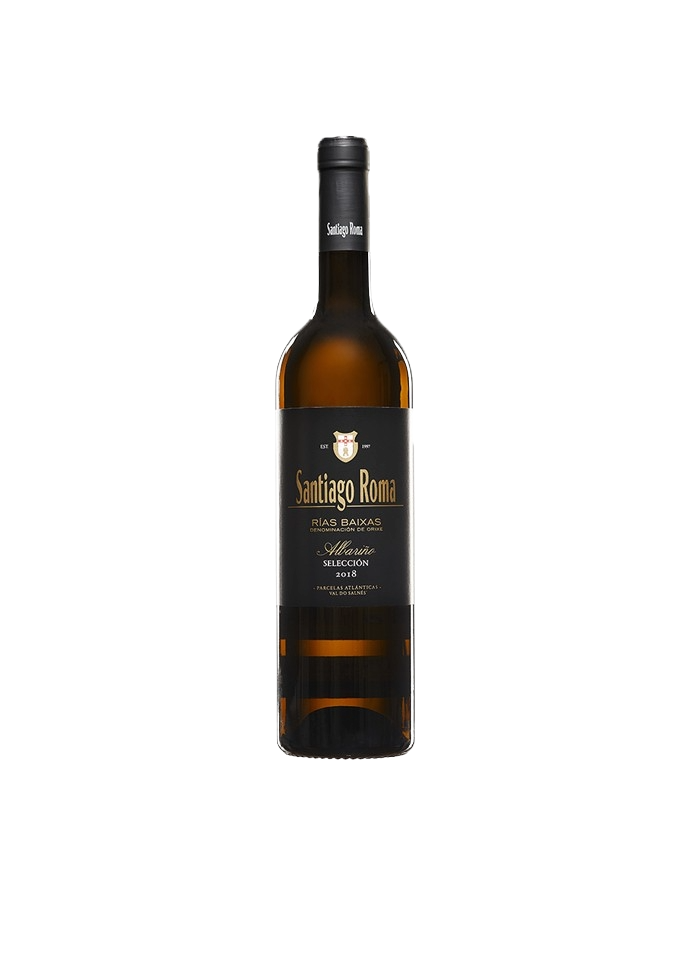
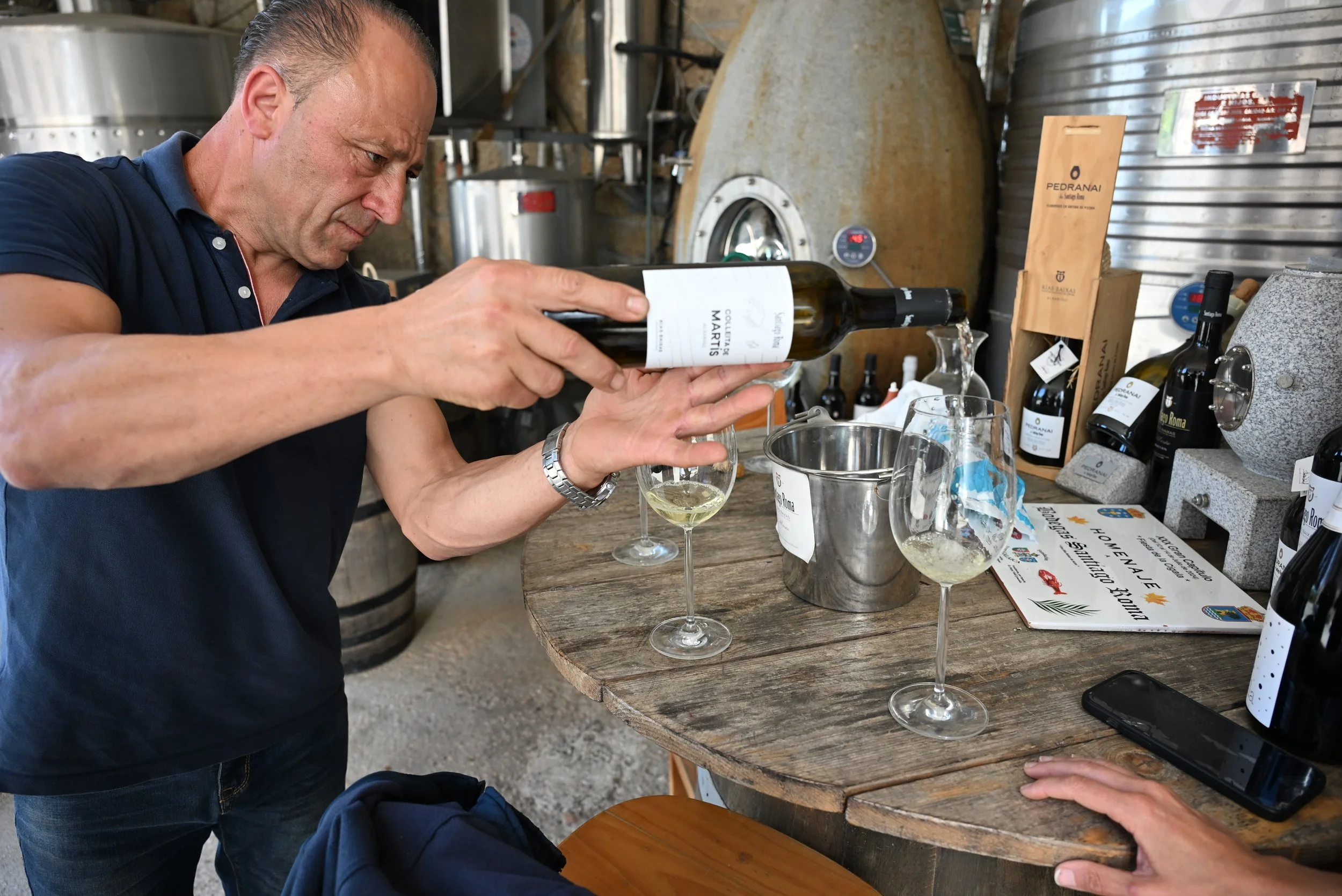
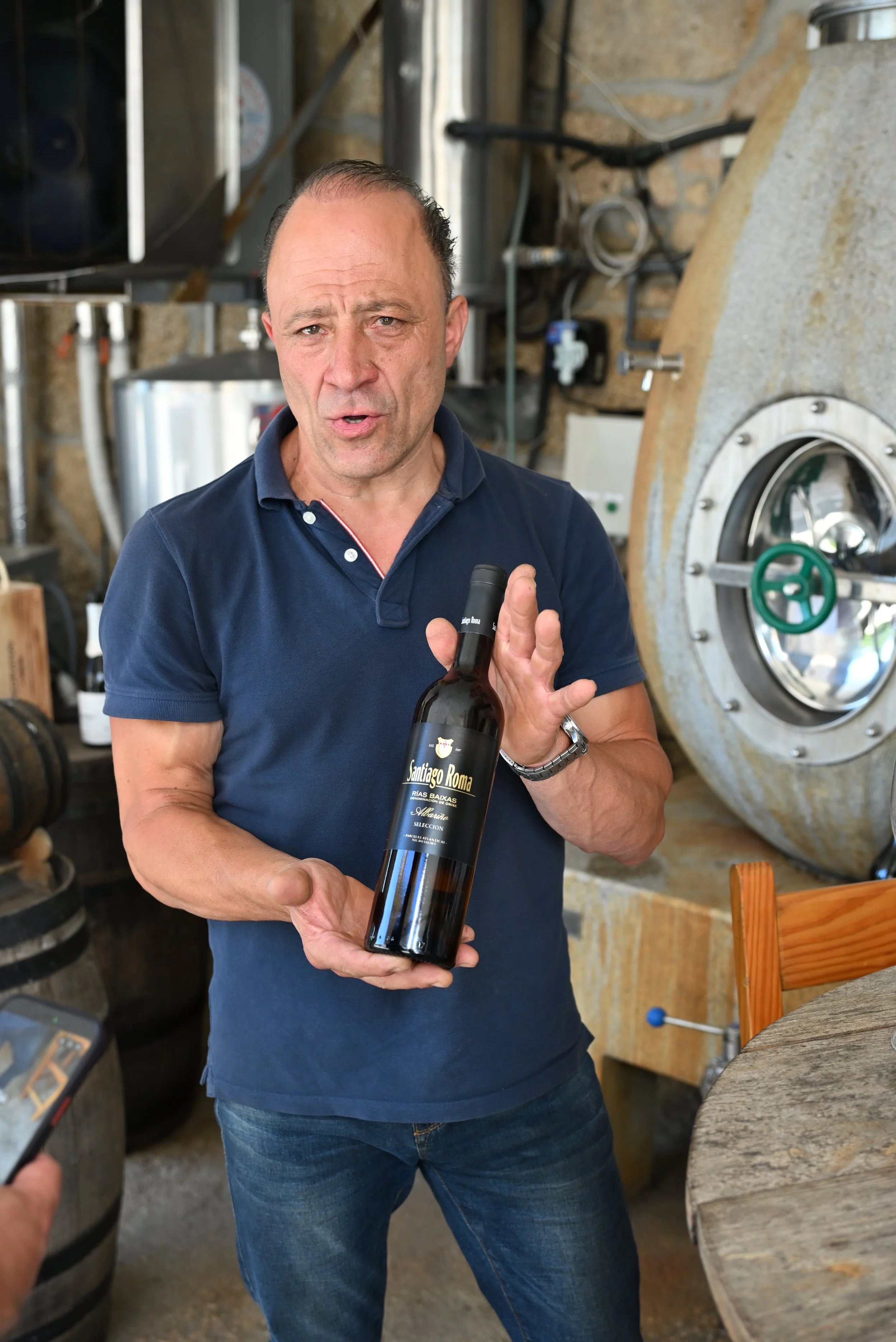
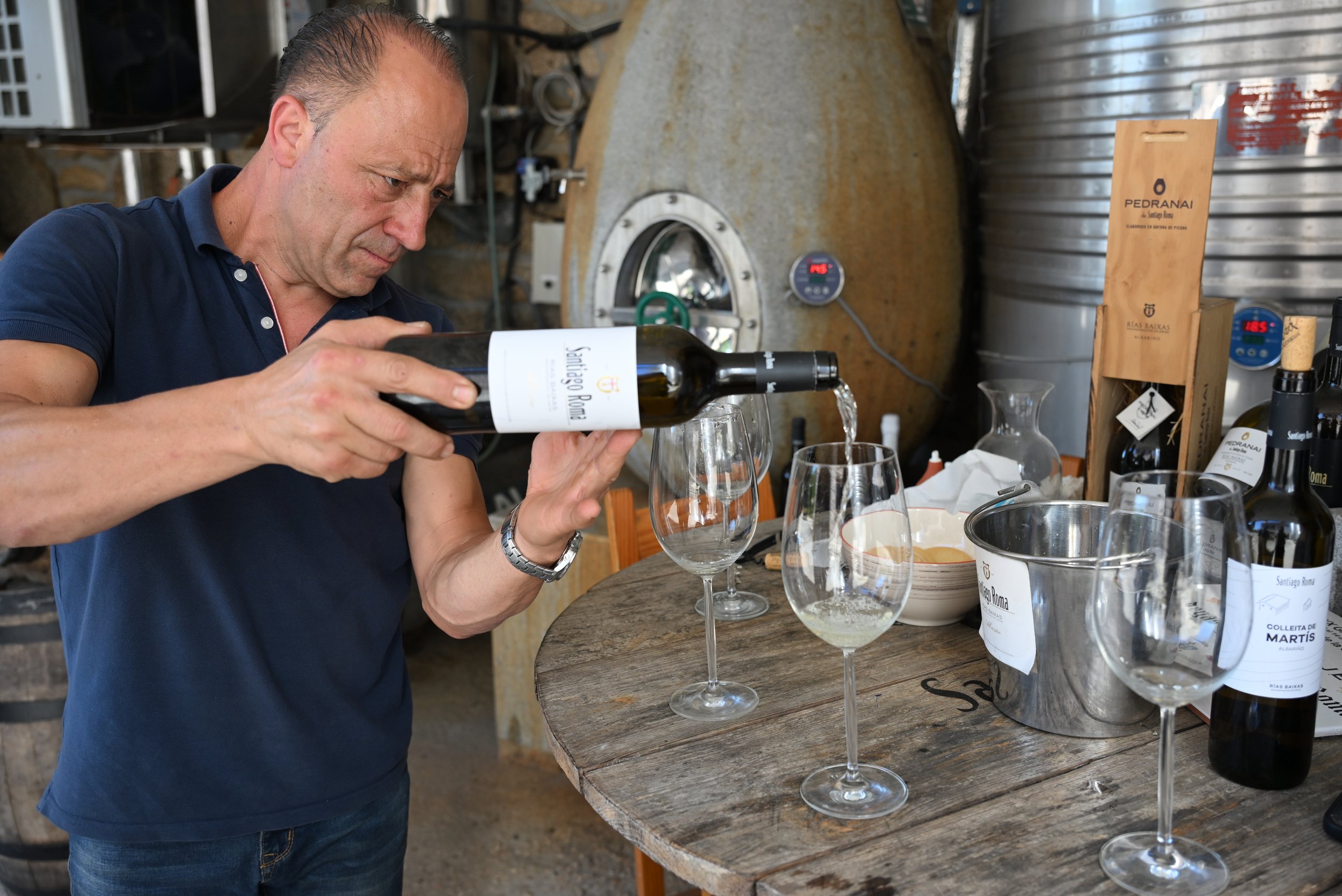
The range begins with Colleita de Martís, named for the family farmhouse. It is produced from younger vines in long-term leased vineyards that Santiago personally farms around Ribadumia. The eponymous Santiago Roma Albariño, or White Label, sits at the center of the estate and is a textbook Albariño representing the heart and focus of Santiago’s production. The fruit for the white label cuvee comes from five different vineyards in Ribadumia averaging 40 to 50 years old. Albariño Selección comes from Santiago’s older vines, drawing from parcels close to his Bodega Martís in Ribadumia. It emphasizes the perfume, freshness, and balance that run through Santiago’s work, but with additional depth and structure with the ability to develop in bottle for a decade or more.
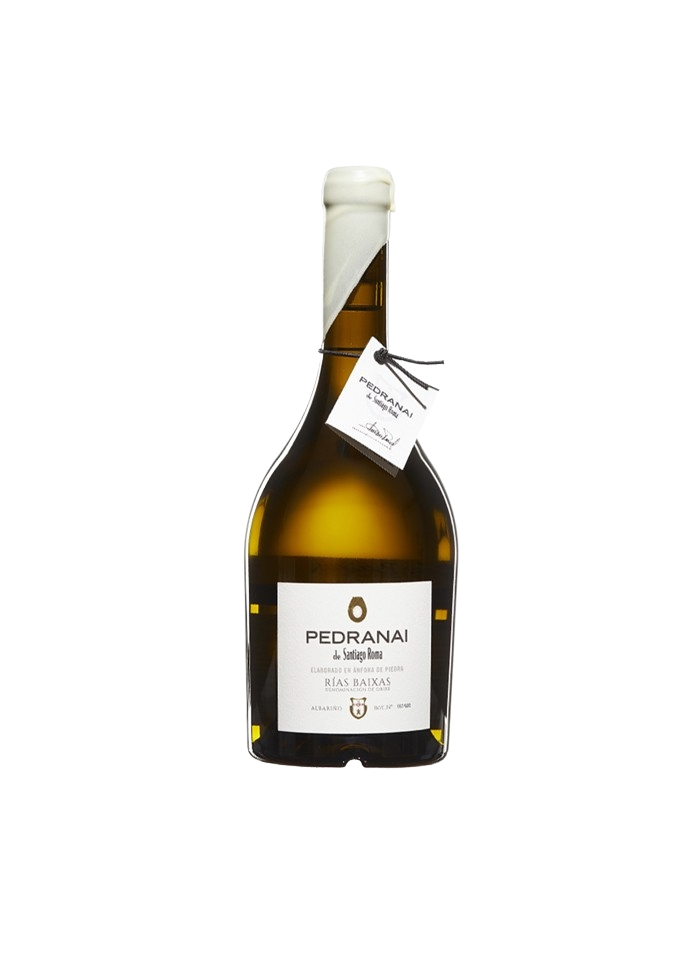
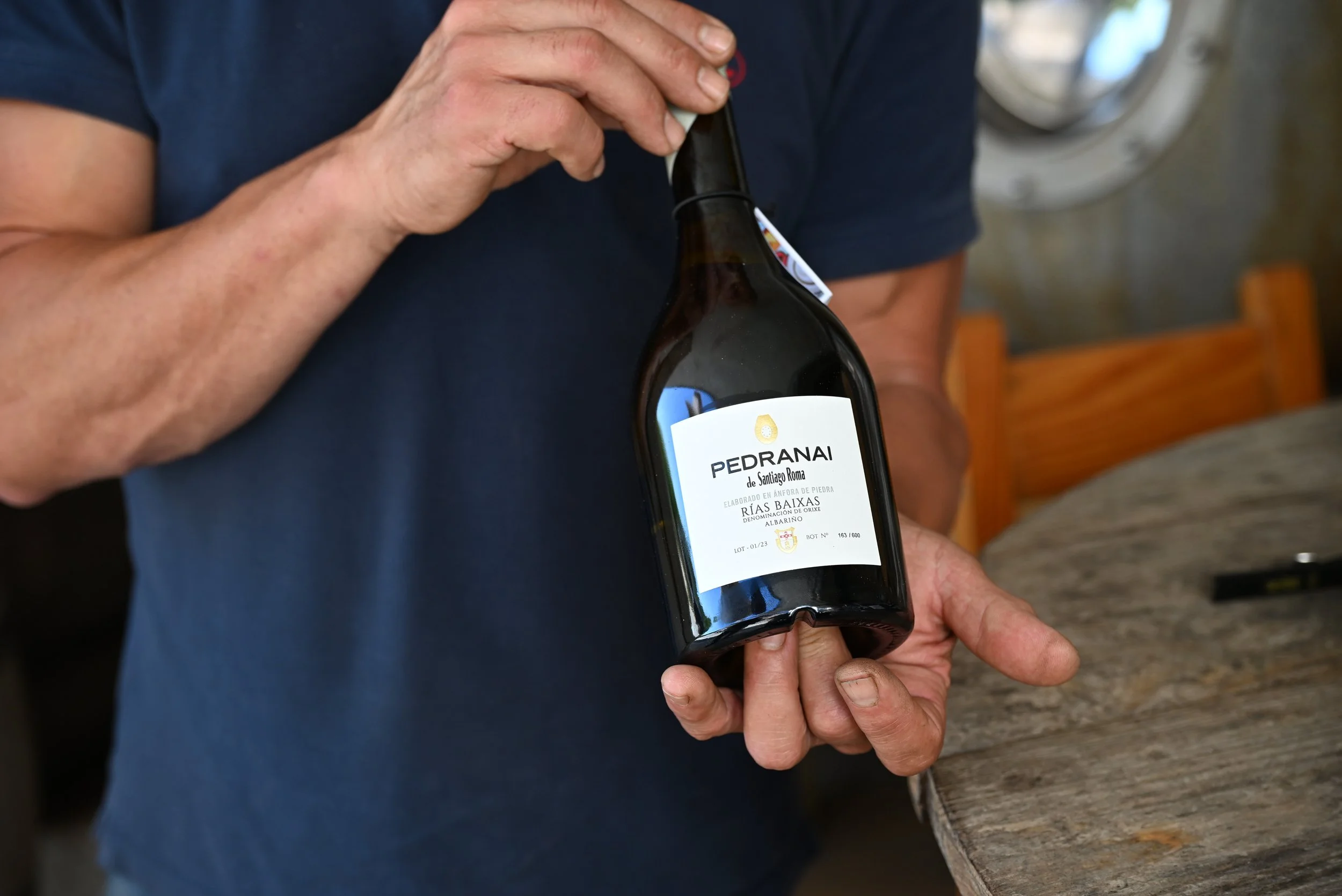
Yet tradition at Santiago Roma has never meant standing still. Santiago is constantly studying his vineyards, soils, microbiology, fermentation, and aging materials, searching for ways to make the wines more precise without obscuring their origin. Perhaps nowhere is that philosophy more clearly embodied than in Pedranai de Santiago Roma.
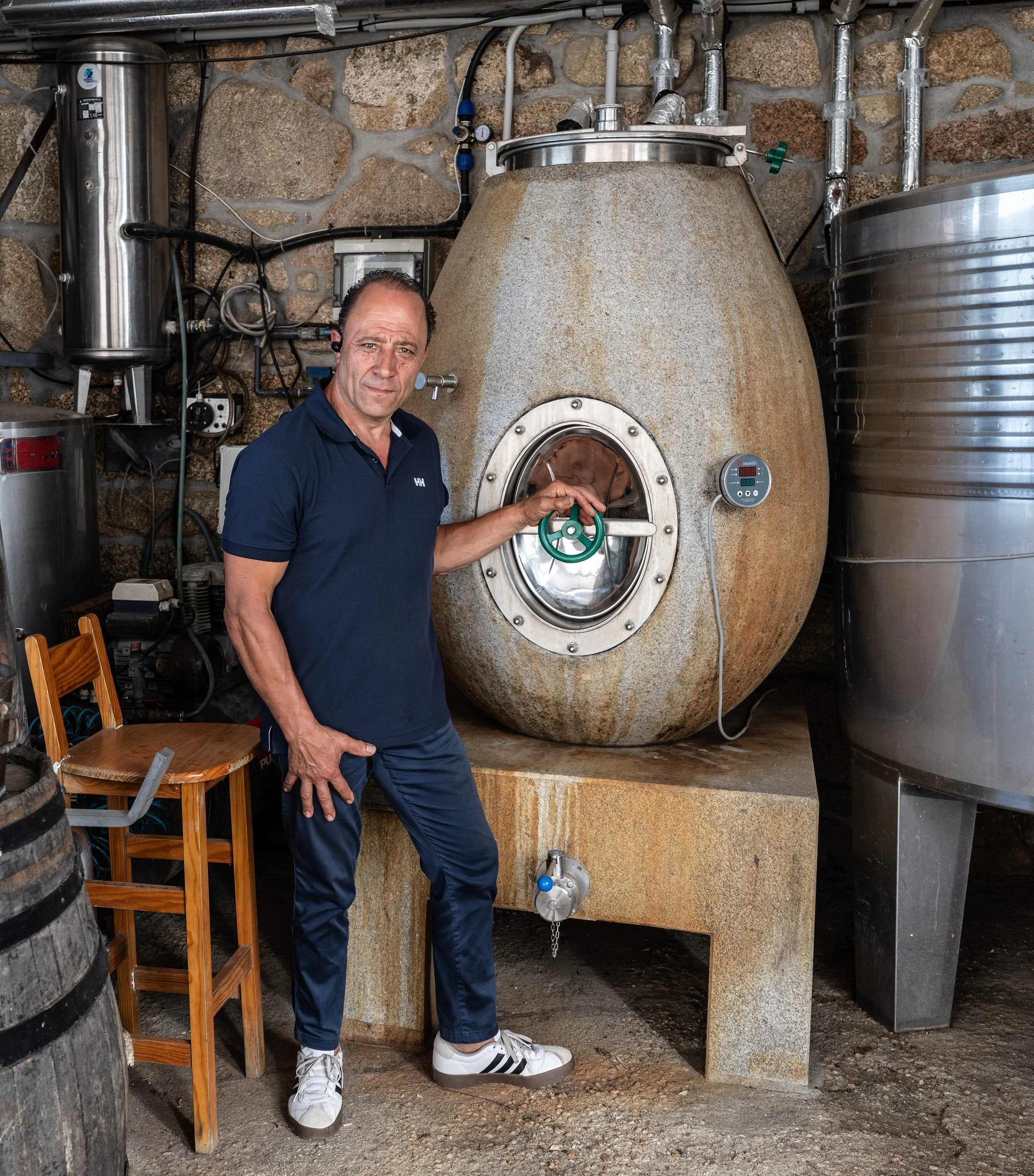
Pedranai emerged from years of Santiago’s research into how an aging vessel could become more connected to the geological identity of his vineyards. Working with Galician granite, he developed the Ánforum Barrica de Piedra, a 450L handmade amphora carved from a single block of granite selected for its purity. Its egg-shaped form encourages natural internal circulation, effectively producing a continuous form of bâtonnage, while the granite itself permits gentle micro-oxygenation.
Pedranai, sourced from an old estate vineyard next to the winery in Ribadumia, became the first Rías Baixas Albariño produced in a granite amphora. The project attracted attention not only from critics but from other winemakers, and the concept has subsequently been adopted by producers elsewhere in Rías Baixas and as far away as Chile. Pedranai has become one of Santiago’s most personal wines, bringing together decades of viticultural and oenological experience in a vessel developed not to impose a new flavor on Albariño, but to find another way of revealing the place from which it comes. Like Selección, it possesses the structure to develop for a decade or longer in bottle.
What makes all of this compelling is that Santiago’s constant experimentation never feels disconnected from tradition. Innovation, for him, is not a rejection of what came before. It is a tool for understanding it. His family, the vineyards around Ribadumia, the granite beneath his feet, the Atlantic weather, and the accumulated experience of previous generations remain the fixed points around which everything else develops.
That philosophy extends to the people around him. Santiago is deeply resistant to the idea of the winemaker as solitary genius and consistently redirects attention toward the people who make the work possible.
“I dislike attributing a wine's success to a single person. A great bottle is the result of the collective effort of everyone working in the vineyard, the winery, and the commercial side of things. The winemaker plays an important role, but without the knowledge and dedication of the entire team, achieving excellence would be impossible. For me, collective effort always takes precedence over individual recognition.”
This humility is not separate from Santiago’s approach to wine. It is one of its defining characteristics. He is exacting without being self-important, ambitious without being restless for recognition. His curiosity is paired with an unusual generosity of spirit. He is thoughtful, inclusive, exceedingly kind, and meticulous in nearly everything he does. There always seems to be another vineyard to inspect, another detail to consider, another experiment underway, another question he wants to understand more completely.
Among the growers we have encountered, Santiago’s relationship with his place is difficult to describe simply as being “local” or native to Ribadumia. Many growers are native to the places where they work. With Santiago, the connection feels deeper. There is an almost instinctive synchronization between the person and the landscape: the way he notices changes in humidity, exposure, soils, vine health, and ripening; the way he understands the purpose behind traditions rather than simply repeating them; and the way every innovation ultimately circles back toward a clearer expression of the vineyards he inherited.
Being a viticultor does not seem like a profession Santiago chose so much as a way of understanding the world that has been forming since childhood. His heritage is present, but never romanticized or treated as something static. He studies it, tests it, questions it, protects it, and continually searches for ways to hand it forward in better condition.
Santiago describes his ultimate objective not as making more wine, but making increasingly better wine: understanding more about his soils and their microbiota, continuing his research, bringing the wines of Galicia to new places, and demonstrating that a family winery can innovate while remaining respectful of both the land and those who came before.
That combination of stewardship and forward movement is precisely what draws us to Santiago Roma. His wines are deeply Atlantic expressions of Albariño, but they are also reflections of the person behind them: precise, energetic, generous, thoughtful, and alive to the smallest details. They carry the Val do Salnés not as an idea or a marketing identity, but as something understood through a lifetime of observation and work.
For Pyrenees, that distinction matters. We look for growers whose wines cannot easily be separated from the people and landscapes that produce them. In Santiago Roma, those elements feel unusually inseparable. The vineyards, the family history, the granite, the Atlantic, the curiosity, and the man himself all seem to speak the same language.