Eguíluz
Ábalos • Rioja Sonsierra • La Rioja • Spain
Location:  Rioja Sonsierra, La Rioja
Village: Ábalos
Appellation: Rioja
Climate: Continental with strong Atlantic influence
Elevation: 540m to 720m
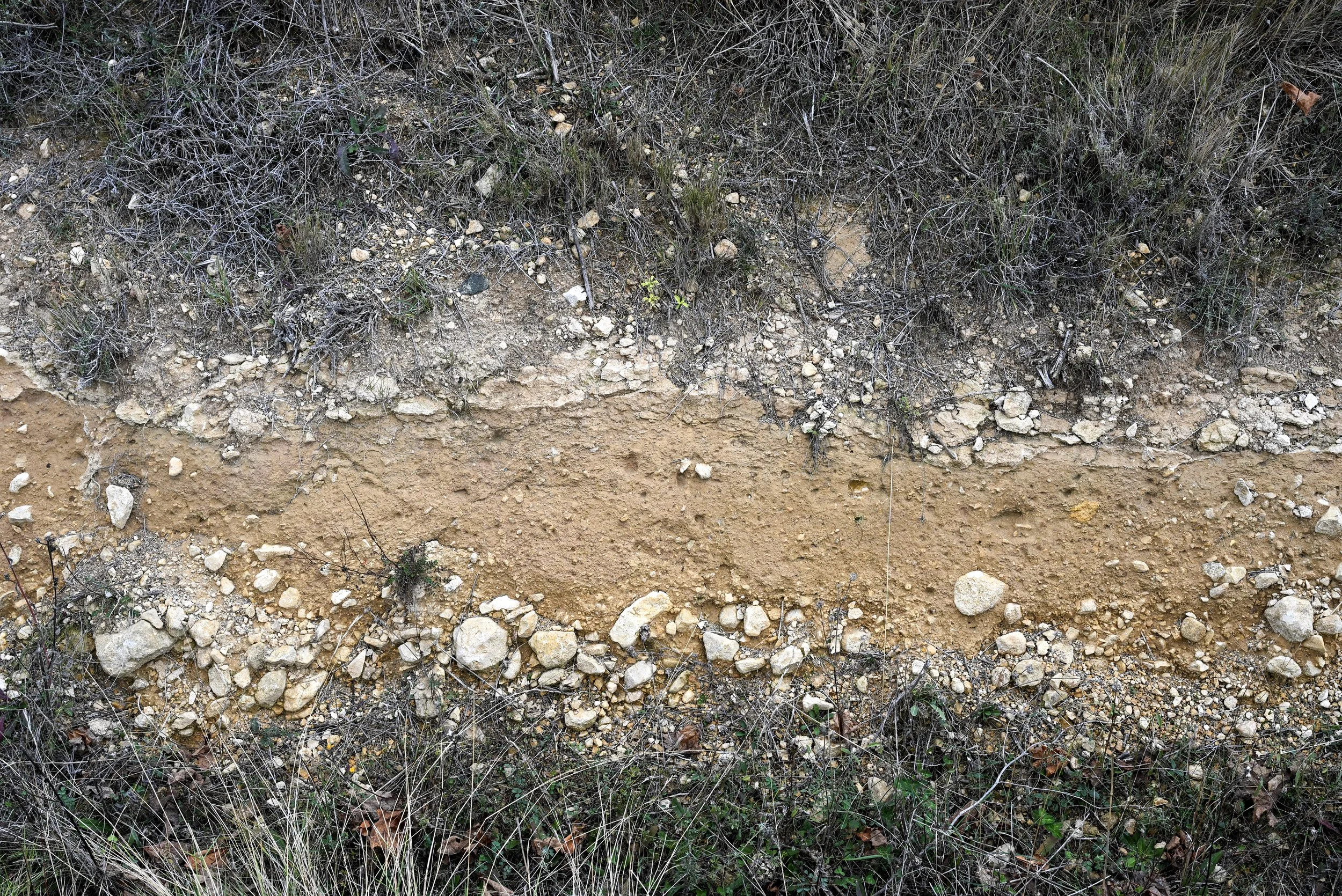
Soils: Calcareous clay loam over fractured limestone bedrock
Vineyards: 22ha • 14 in Ábalos, 8 in Labastida
Farming: Sustainable, no herbicides
Varieties: Tempranillo, Garnacha, Viura, Garnacha Blanca, Calagraño
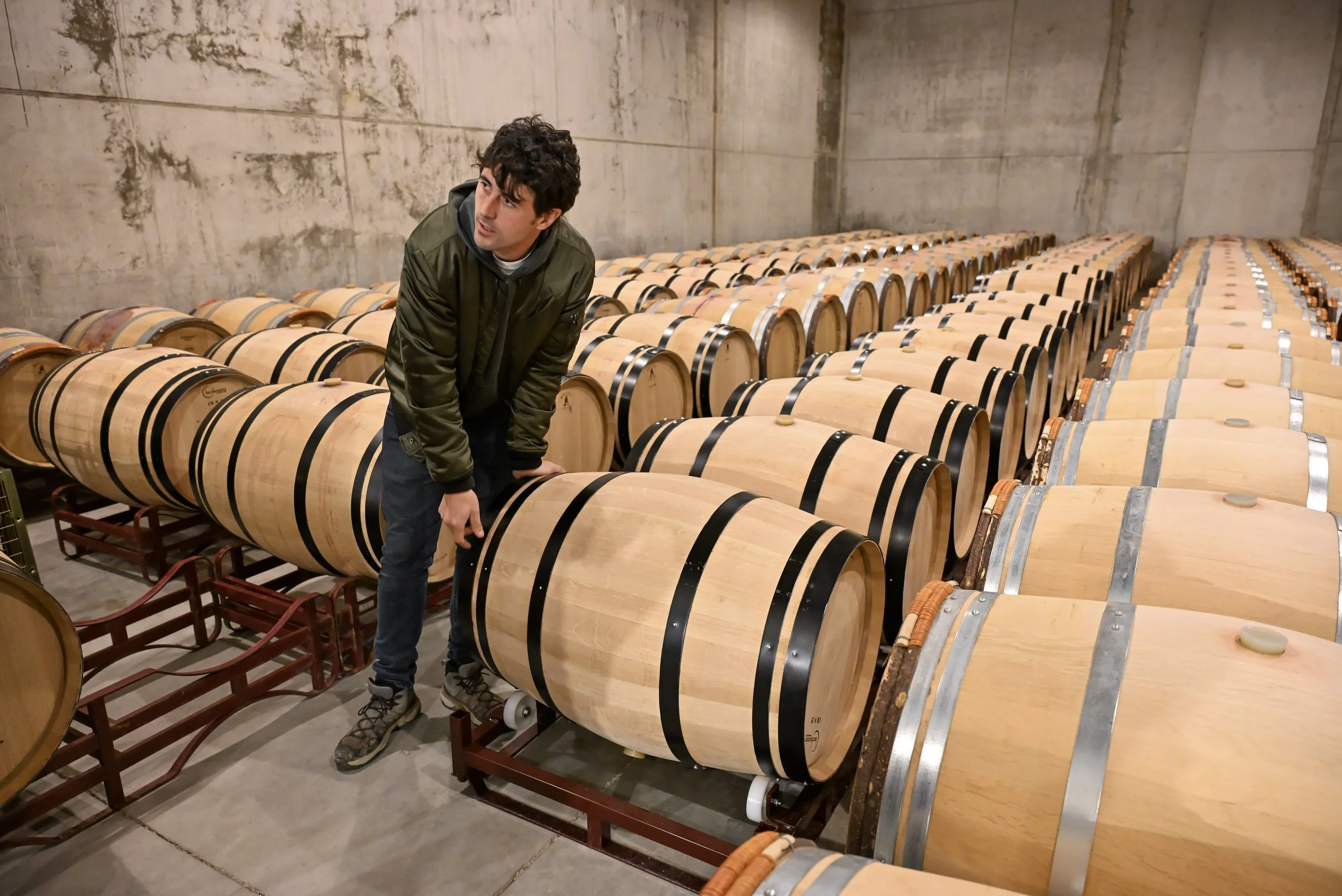
Cellar: Hand harvesting, whole clusters, gravity flow, foot-treading, fermentations in cement, minimal intervention, malo &aging in French barrels
Proprietors: Eguíluz family
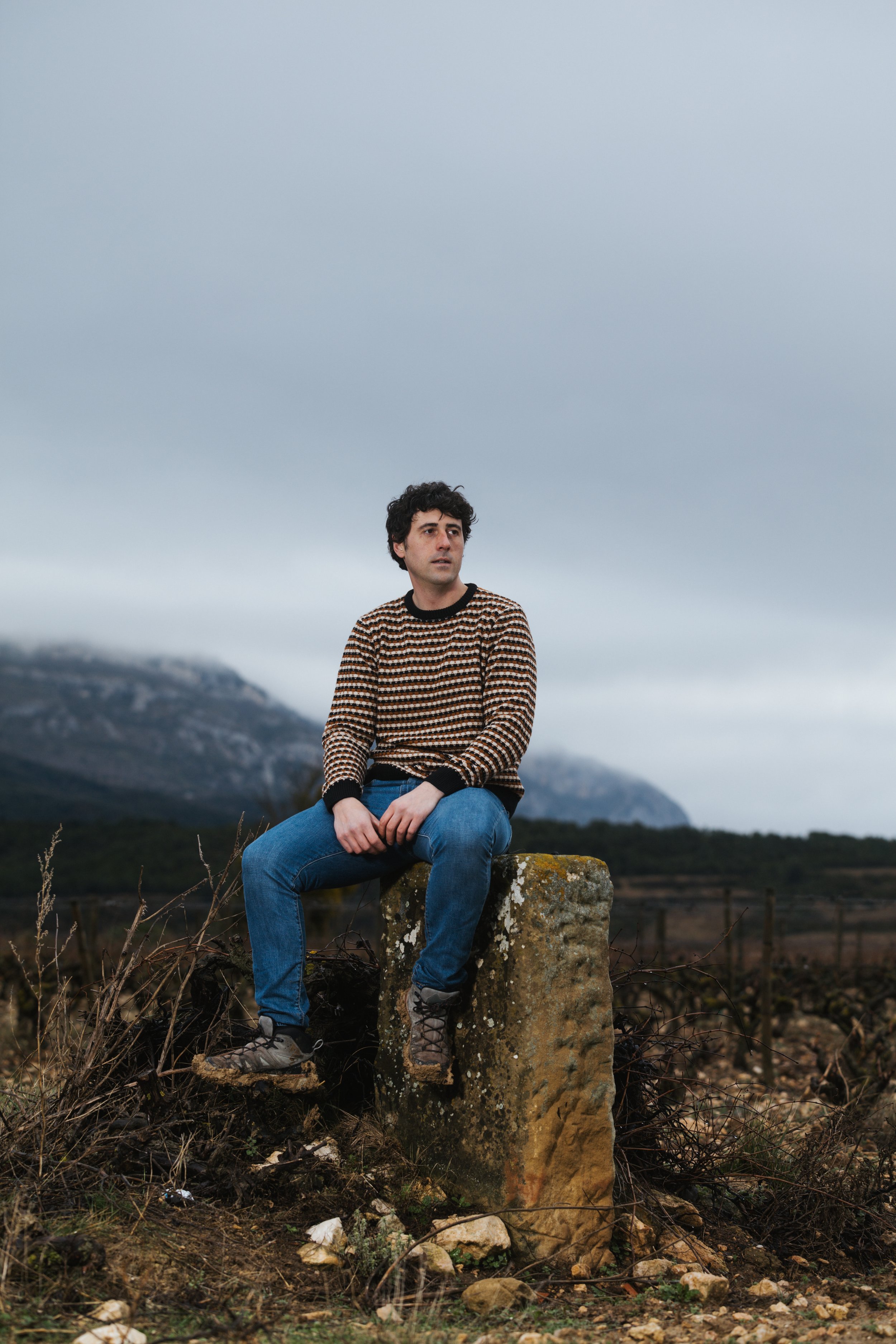
Viticulture: Javier & Israel Eguíluz
Winemaker: Israel EguíluzÁbalos and the Rioja Sonsierra
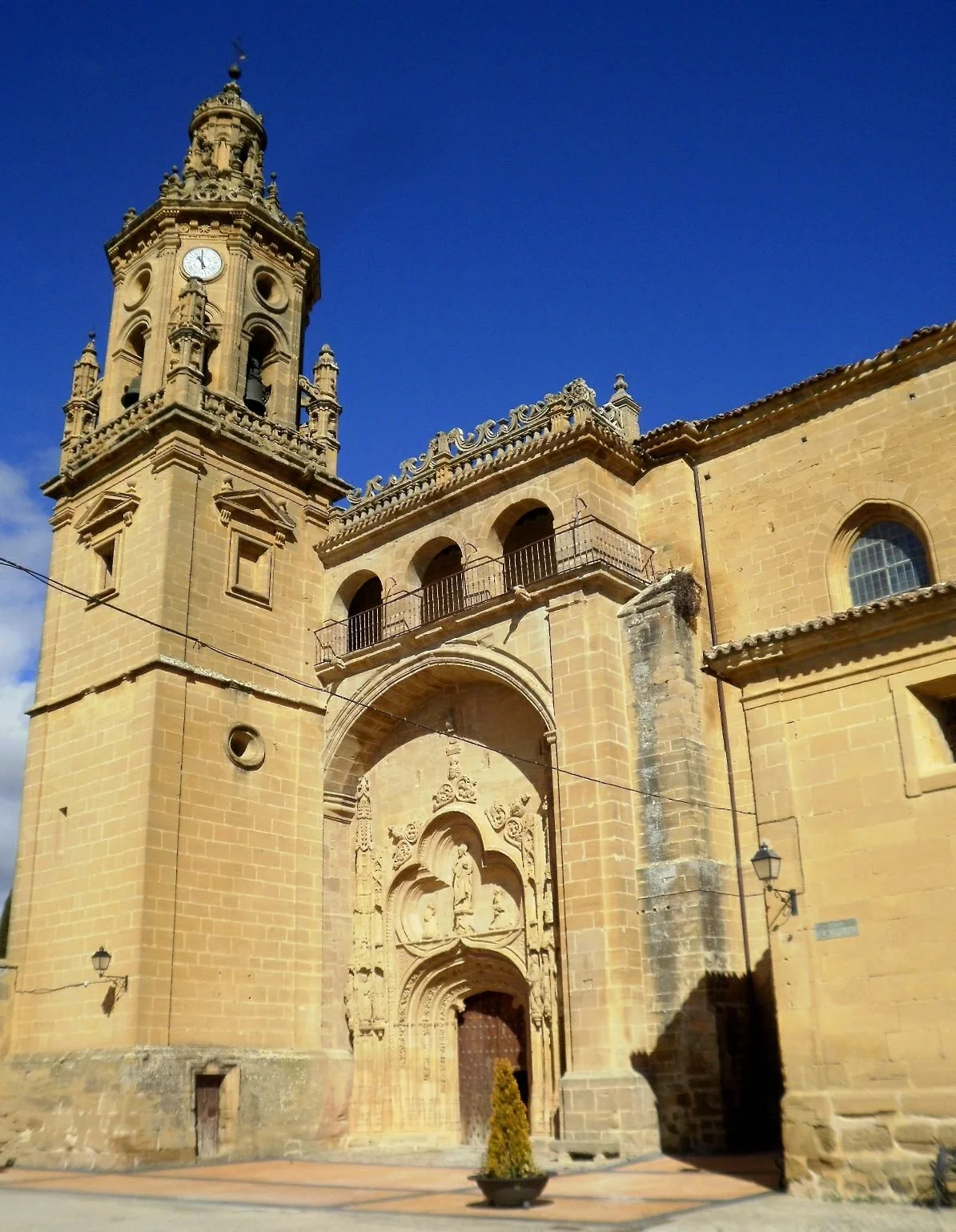
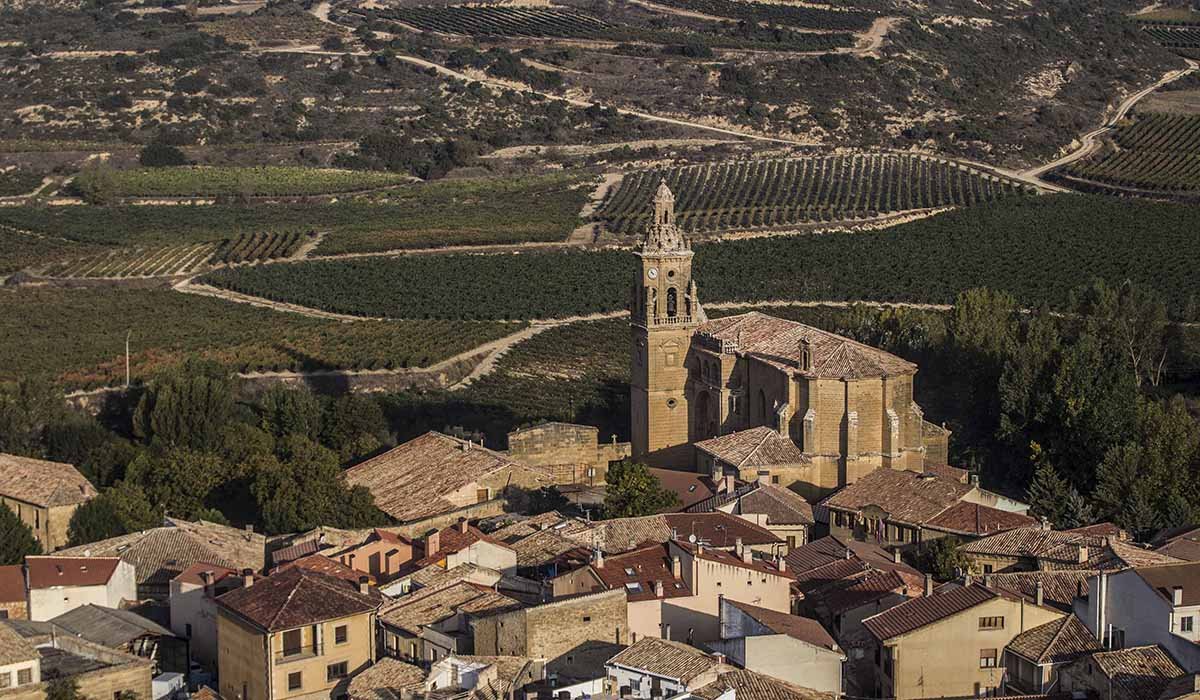
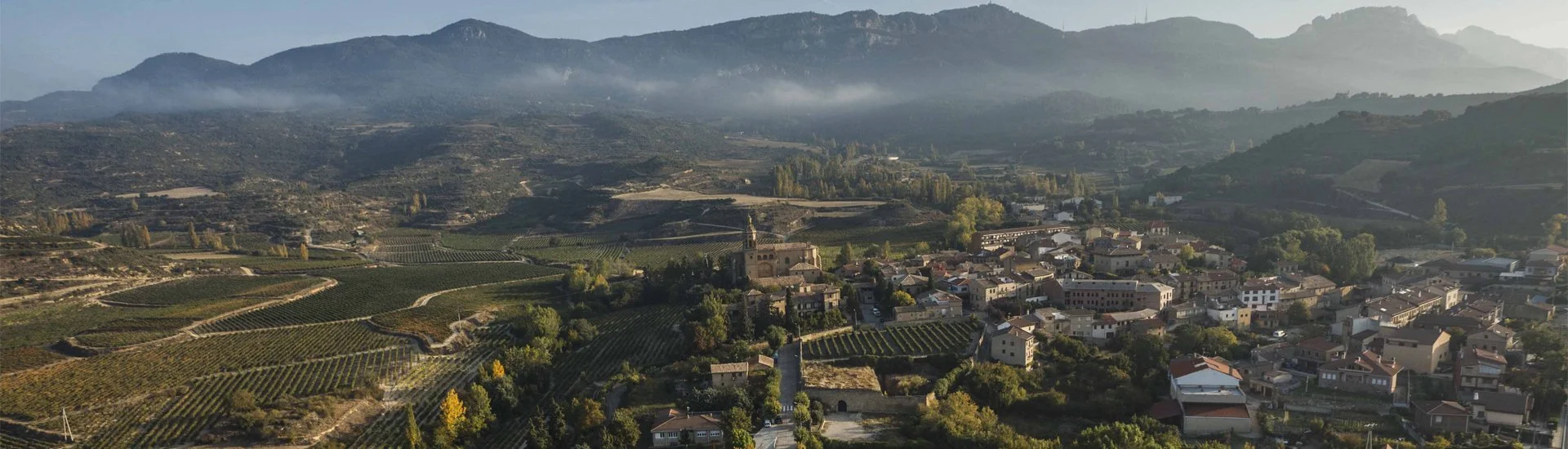
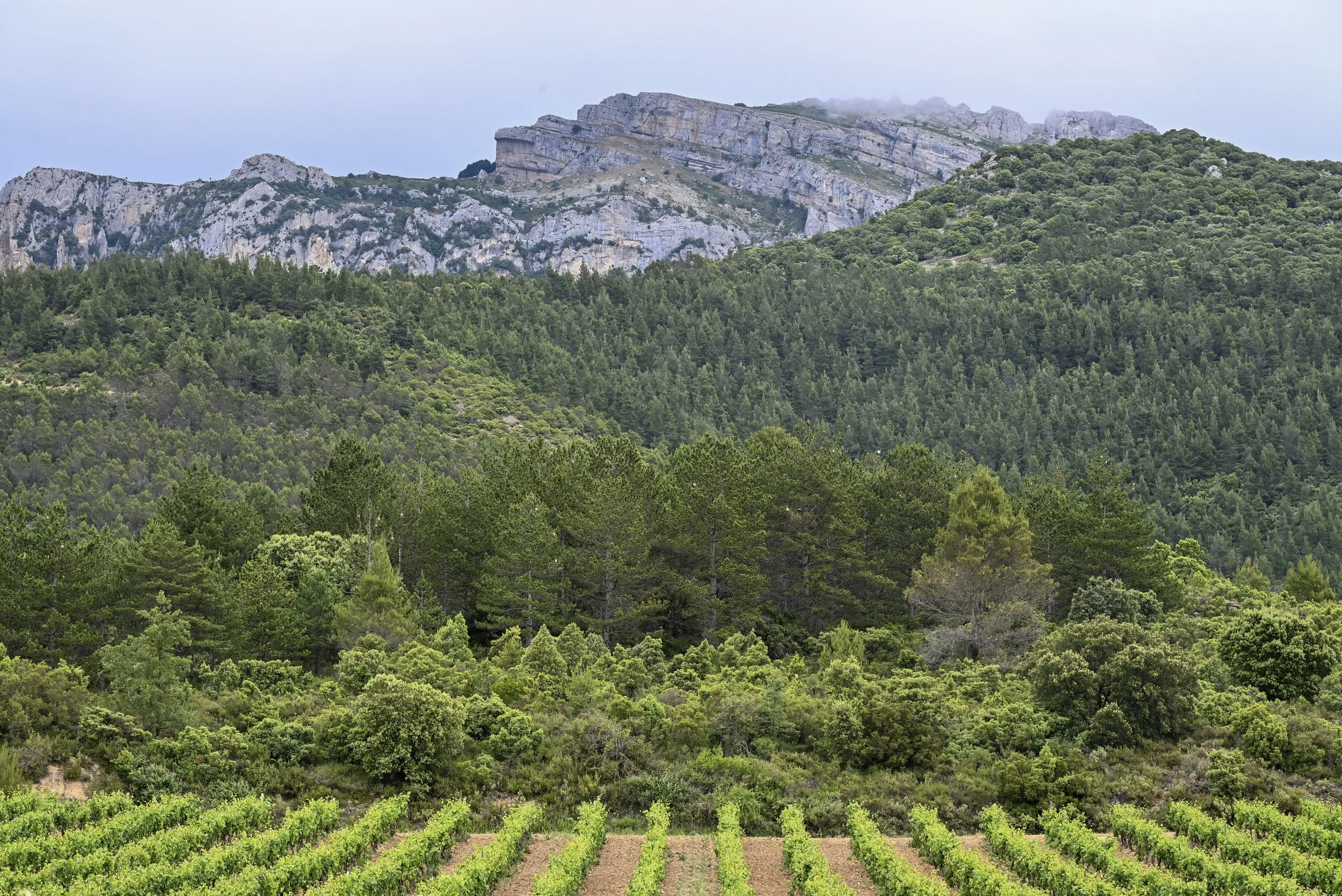
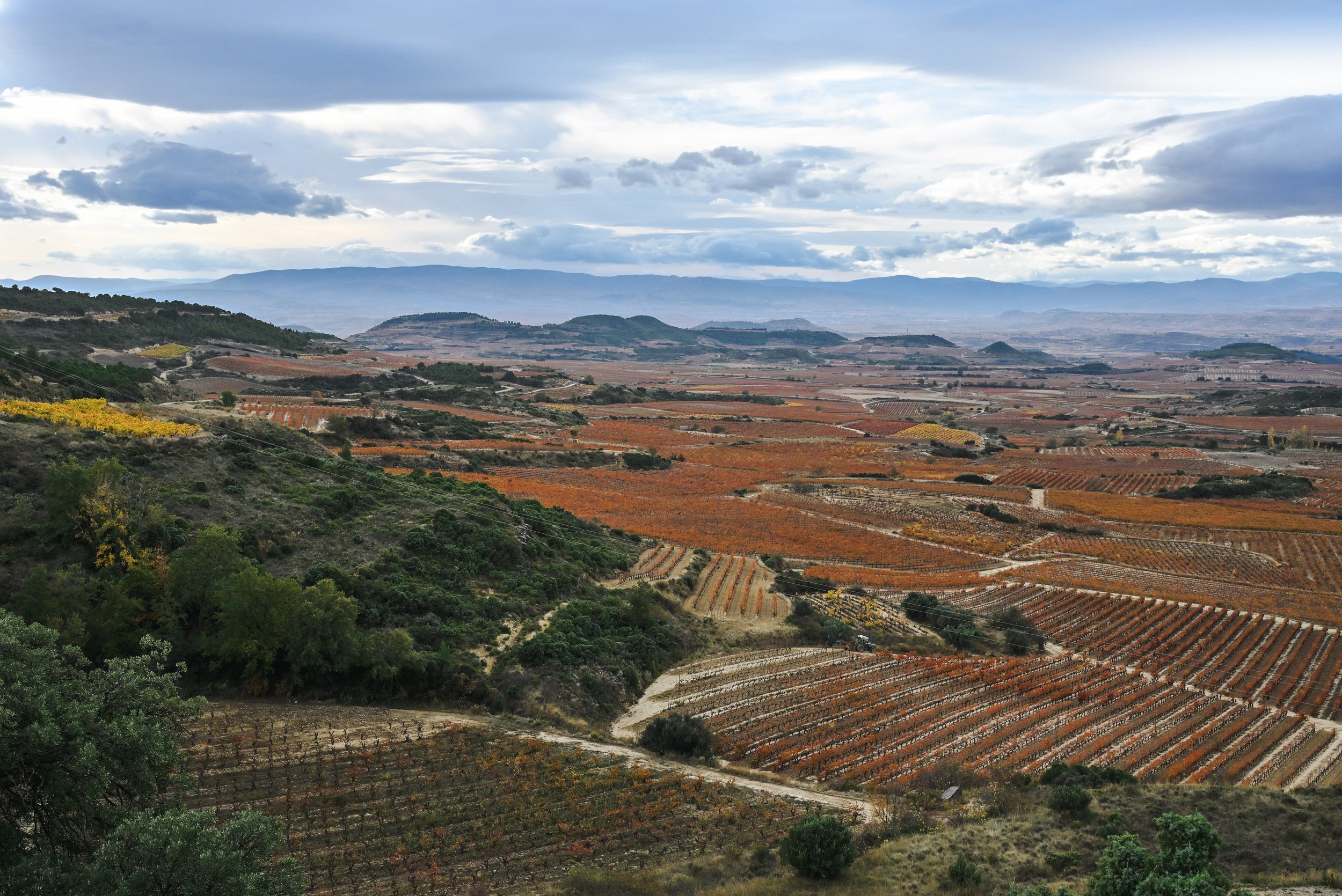
Bodegas y Viñedos Eguíluz is a family winery located in the tiny village of Ábalos, north of the Ebro River and tucked directly beneath the southern face of the Sierra de Cantabria in an area known as the Sonsierra. Ábalos lies in the western part of this remarkable winegrowing corridor, which runs along the base of the Sierra de Toloño through the Basque province of Álava and the autonomous community of La Rioja. The Sonsierra is one of Rioja’s most dramatic and impressive winegrowing landscapes, naturally gifted with exceptional terroir and a strong Atlantic influence that has inspired generations of growers. Many of Rioja’s most distinguished vineyard sites are concentrated here, near the villages of Ábalos, Briñas, Elciego, Elvillar, Labastida, Laguardia, Lanciego, Samaniego, San Vicente de la Sonsierra, Villabuena, and Villalba.
The story of the Eguíluz family is inseparable from this place, shaped by generations of hard work, accumulated understanding, and a willingness to keep refining what Ábalos can express. In many ways, the family represents the broader transition taking place across Rioja as the region moves beyond a model historically centered on brand identity, standardization, and cellar aging toward a renewed focus on villages, vineyards, and individual places. It is an approach rooted in the land rather than the cellar, not unlike the grower-Champagne movement that brought greater attention to the villages and vineyards behind Champagne’s grandes marques. Israel Eguíluz is one of the most exciting young growers participating in this evolution and helping to write the next chapter for place-driven wines in Rioja.
Wine remains central to village life in Ábalos. Fourteen wineries operate within a community of only a few hundred inhabitants, most of them small family businesses. Ábalos belongs politically to La Rioja and is classified within the Rioja Alta subzone of the Rioja DOCa, but geographically and geologically it forms part of the greater Sonsierra. Together with neighboring San Vicente de la Sonsierra, it occupies a small area of La Rioja north of the Ebro, sharing the landscape, soils, and viticultural character of nearby Rioja Alavesa villages such as Samaniego and Labastida.
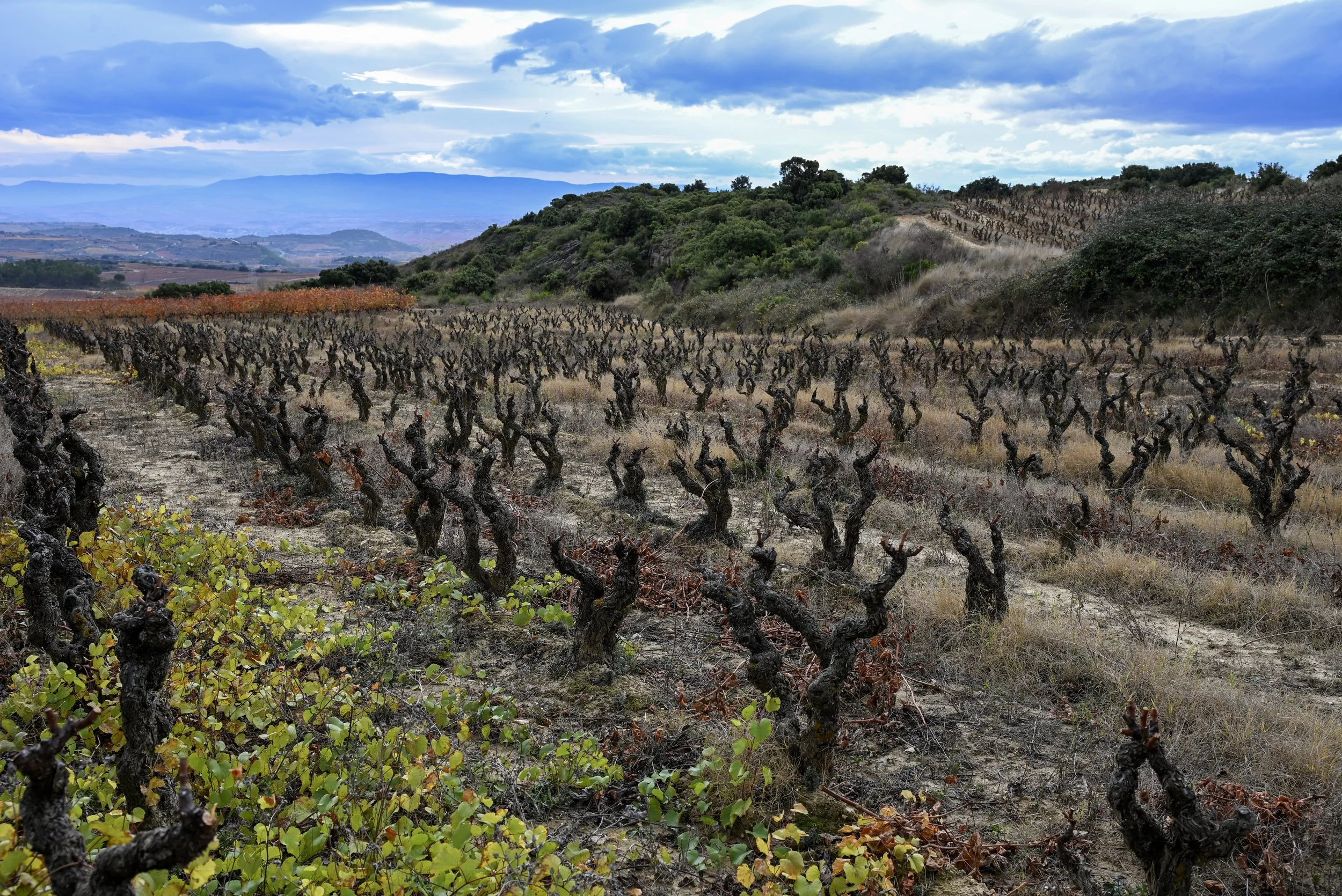
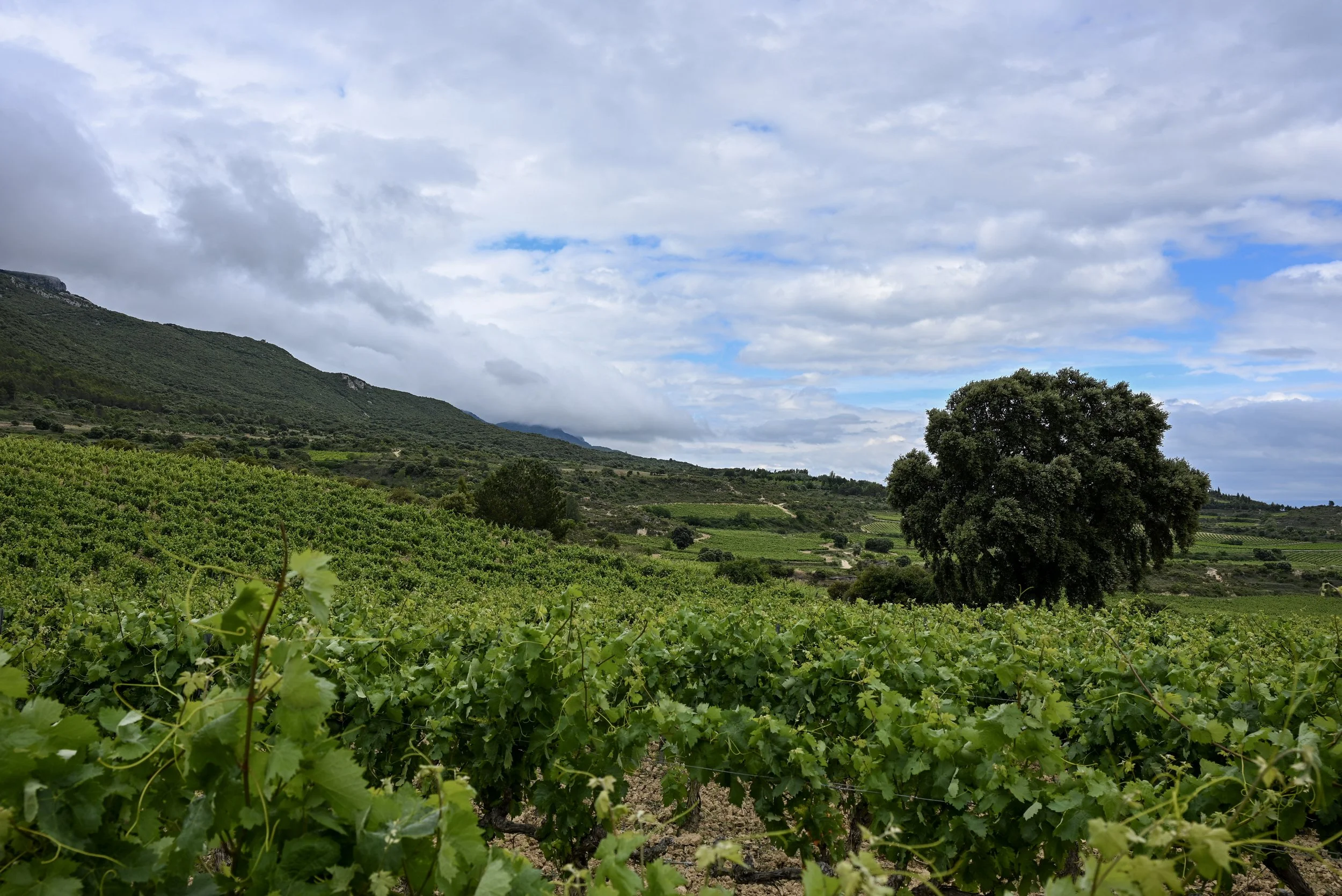
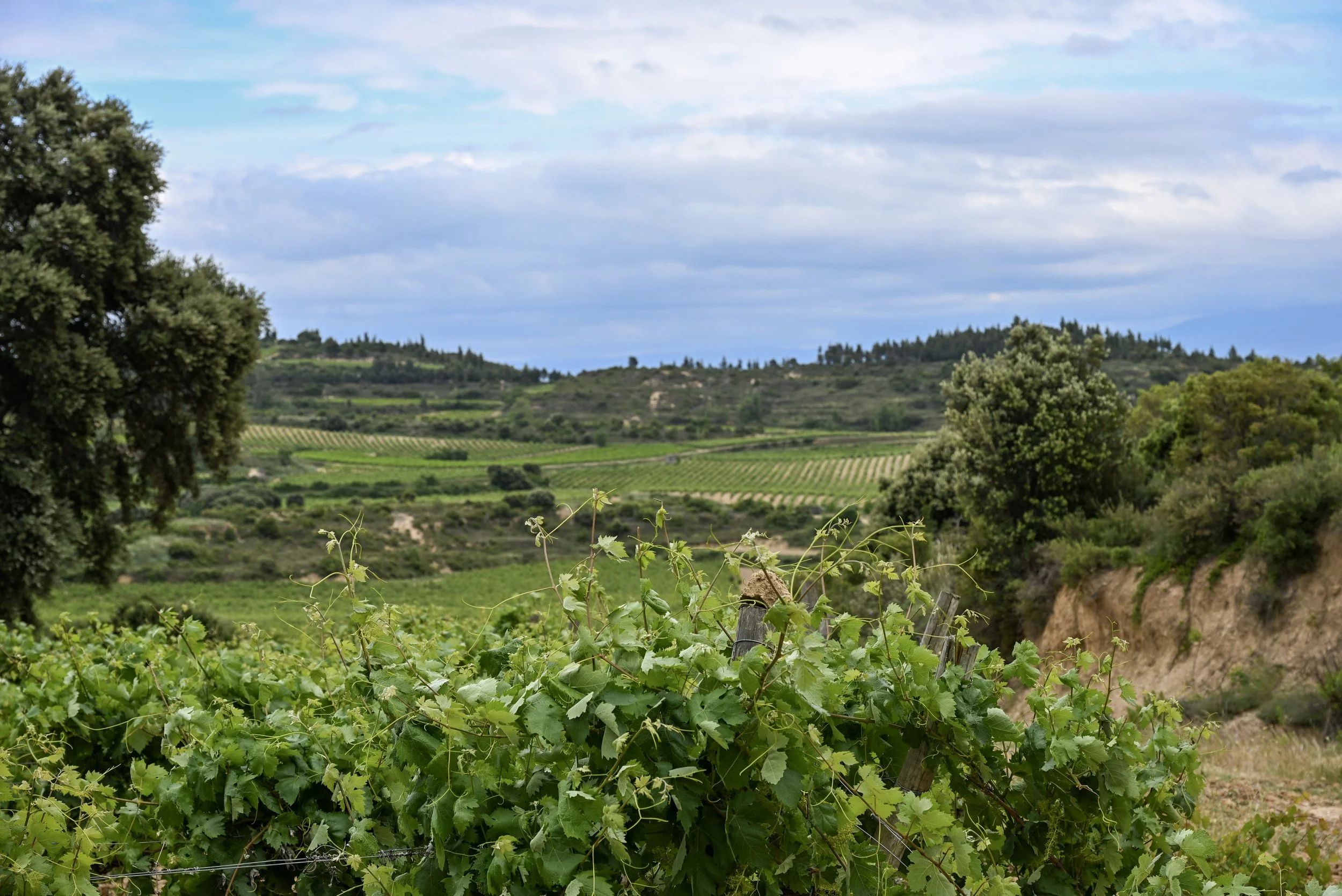
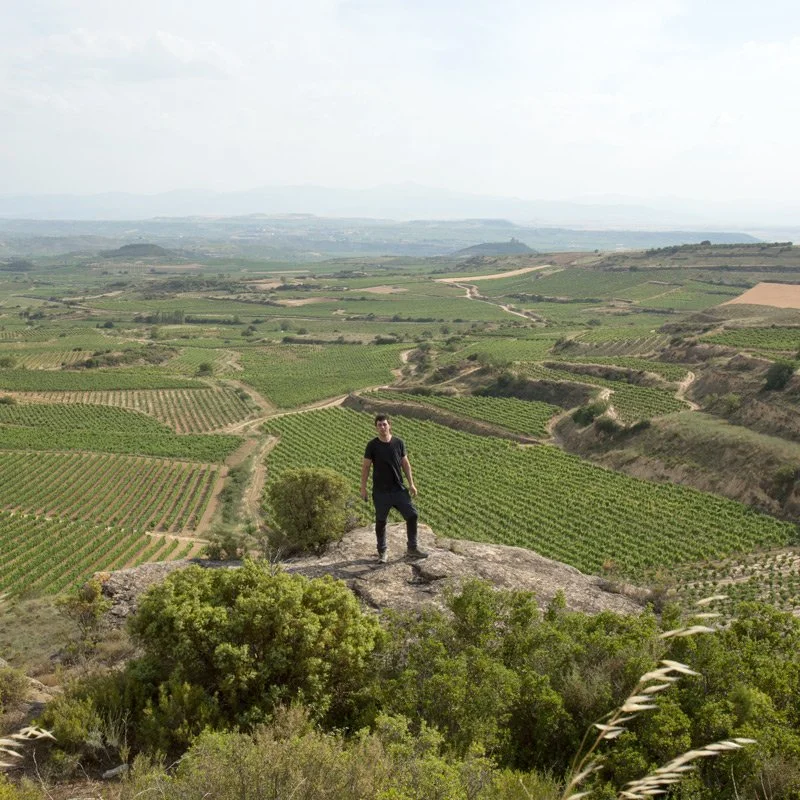
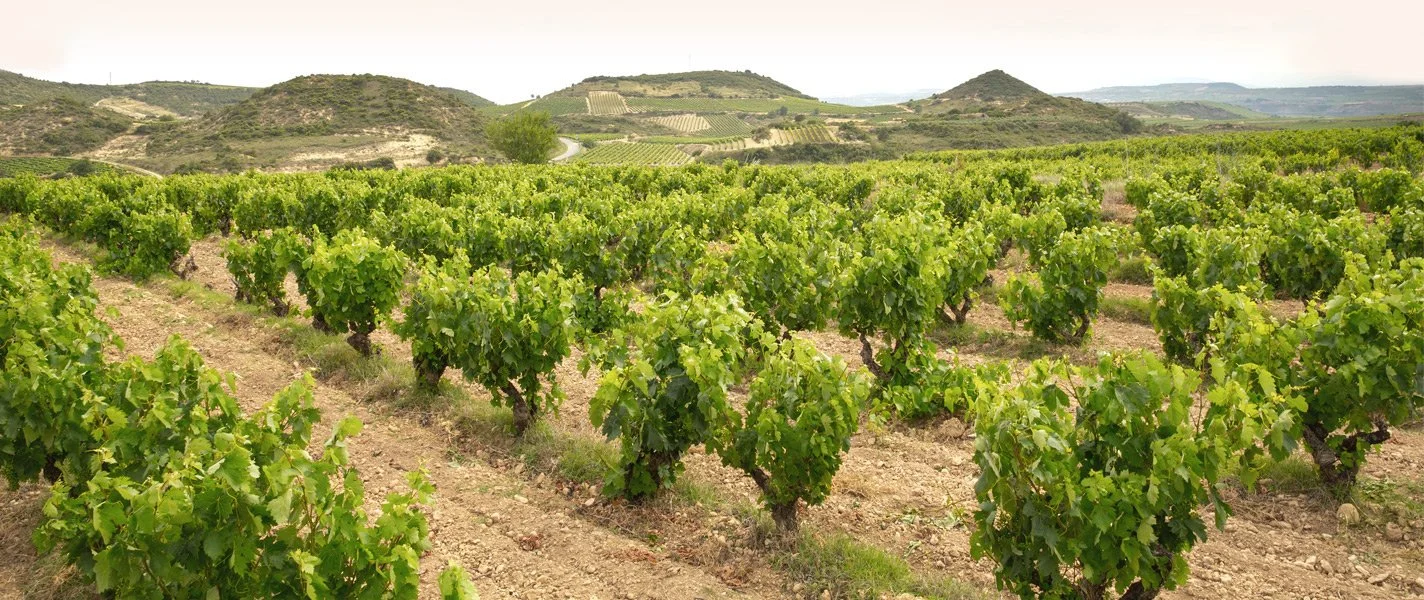
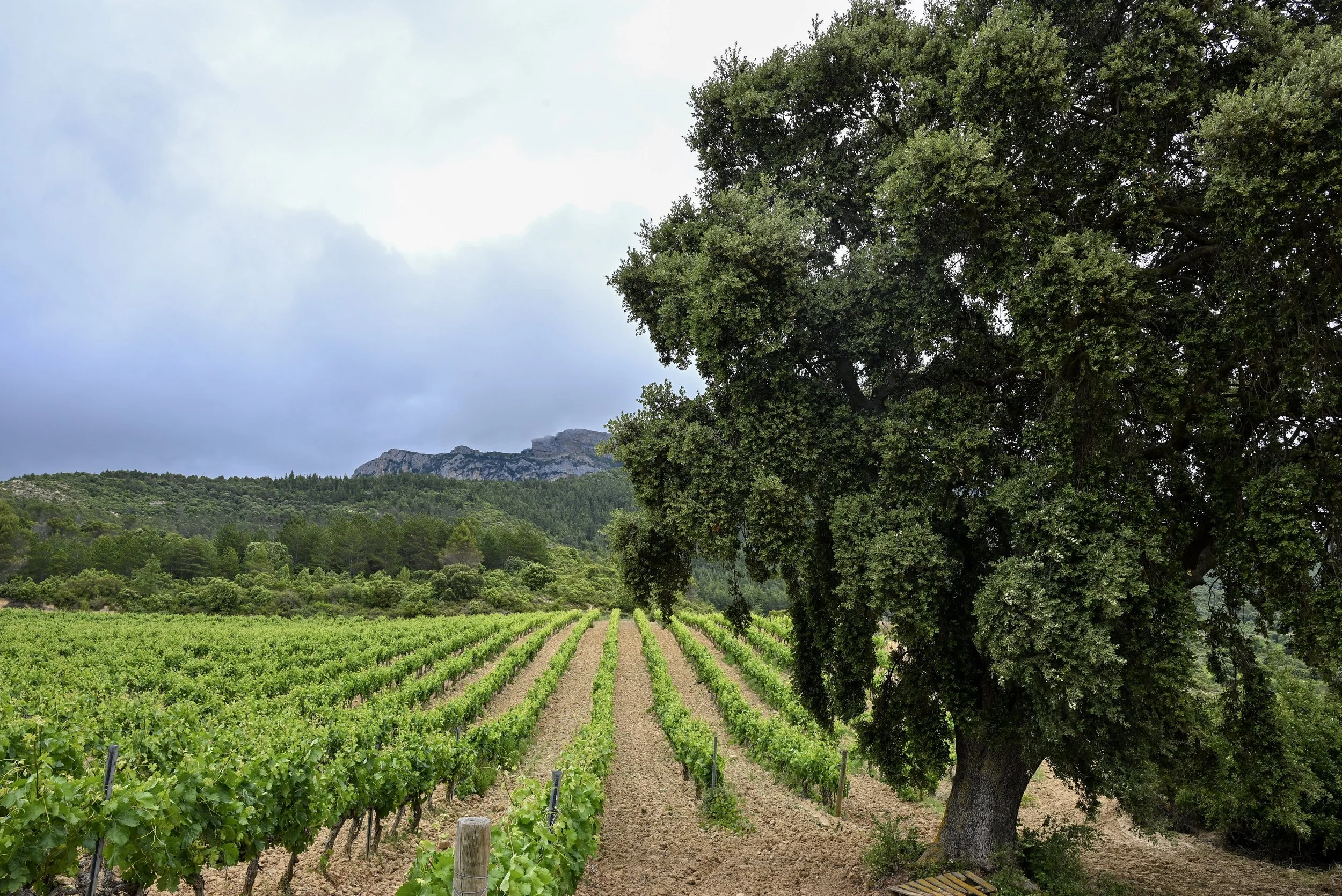
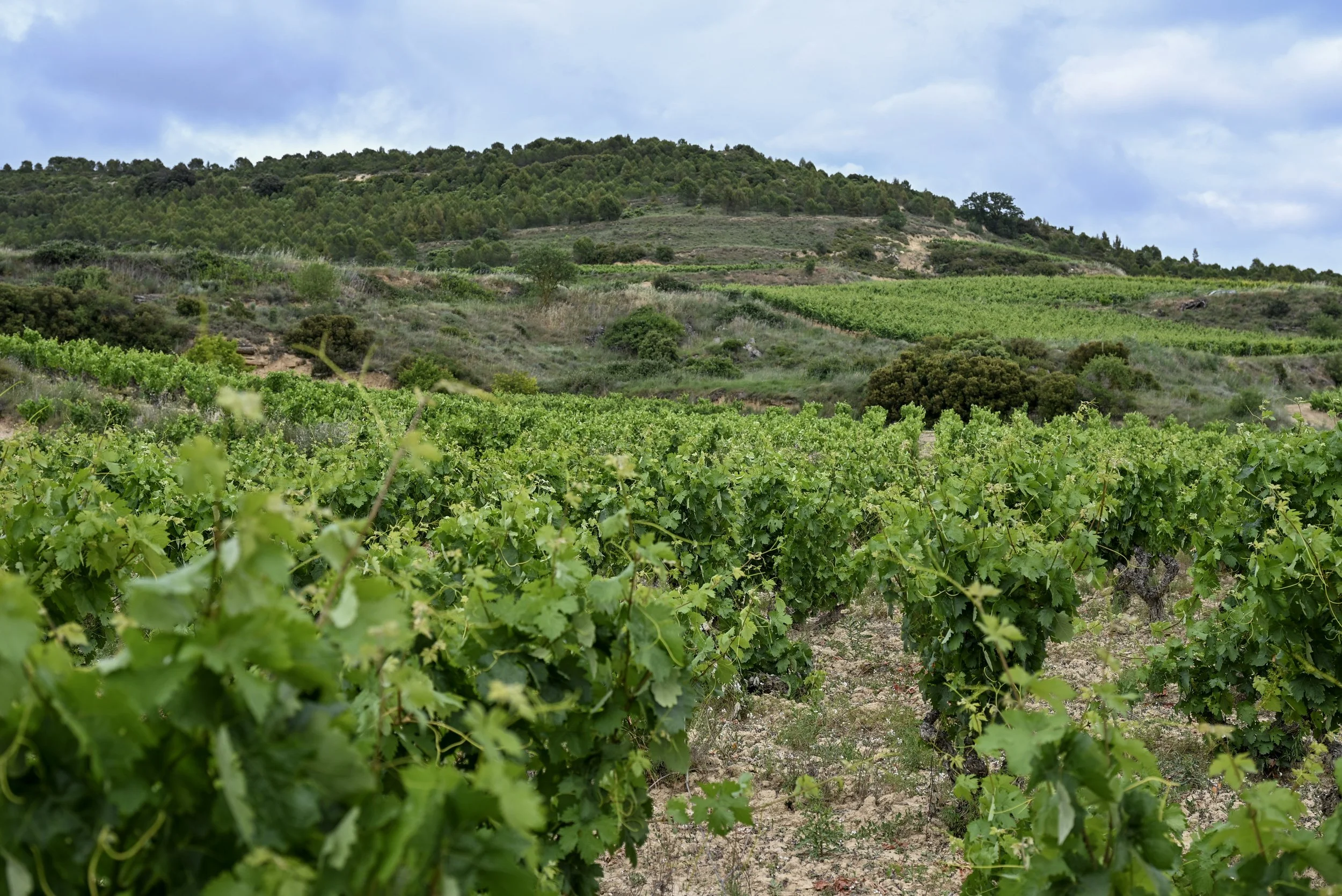
Standing in the vineyards beneath the Sierra de Cantabria, one experiences an immediate sense of timelessness and connection to this ancient landscape. The mountains rise abruptly behind the vineyards like a giant limestone wave before the land falls south toward the Ebro through a succession of slopes, ridges, hollows, and small hills. The Sierra provides shelter while the area retains a pronounced Atlantic influence, creating a comparatively cool growing environment. Through the gradual weathering of the underlying mother rock, the soils are primarily calcareous clay, nutrient-poor and marked by a high proportion of chalk, often lying less than a meter beneath the topsoil. Elevation, orientation, and irregular topography create considerable variation within a relatively small area. Together, these geological and climatic conditions provide an exceptional environment for wines of complexity, freshness, and longevity.
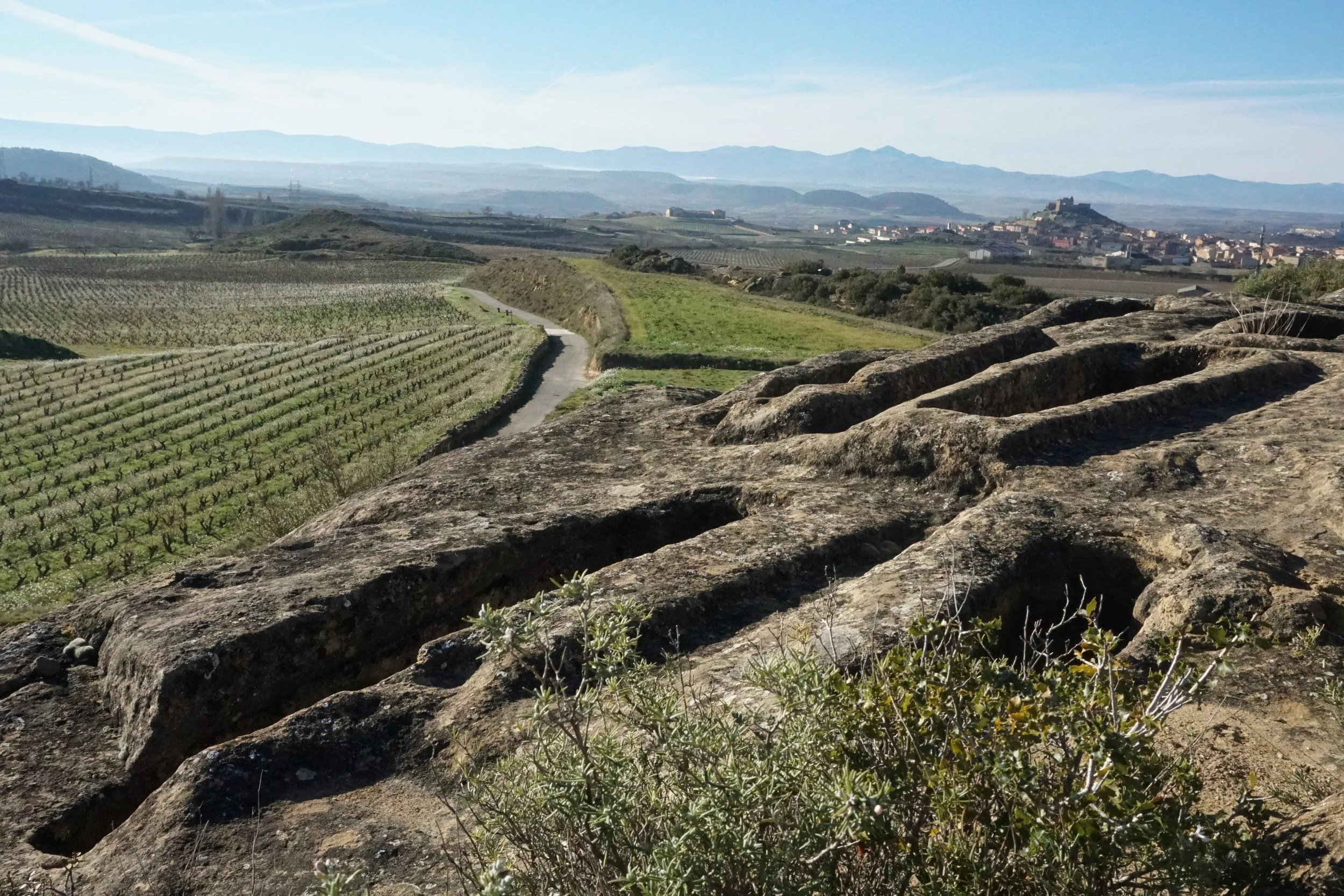
The landscape surrounding Ábalos still carries the physical traces of the communities who farmed here long before Rioja developed its modern identity: religious hermitages, medieval roads, necropolises, vineyard shelters, and ancient rock-cut lagares scattered among the vines. Between Ábalos and San Vicente alone, nearly one hundred of these wine presses carved directly into the vineyard bedrock survive, remnants of a time when growers crushed grapes beside the vineyards themselves.
That history matters because nothing here exists in isolation. The modern inhabitants of this deeply layered landscape continue to work among the traces left by countless generations before them, each of whom cultivated, modified, and interpreted the same hillsides. In this sense, the viticultors of today remain in direct conversation with the past.
It is within this context that Bodegas y Viñedos Eguíluz has evolved as one of the compelling modern interpreters of Ábalos and the Sonsierra, preserving the traditions of its village while increasingly turning its attention toward the individual vineyards that give the landscape its identity.
Eguíluz: Ábalos Wine in their Blood
The Eguíluz family’s roots in winegrowing extend back several generations, but the winery itself was established in 1982 by Javier Eguíluz, a cosechero, or grape grower. Javier grew up in Ábalos in a family for whom agriculture and wine were simply part of everyday life. His parents operated the village butcher and fish shop, but Javier remembers wine always being made at home. Several families might come together to fill a vat, divide the first wine among themselves, and sell what remained.
Like many families in the Sonsierra, the Eguíluz were grape growers before they were estate bottlers. Much of their fruit was historically sold to larger wineries, while a portion of each harvest was kept for the family's own wines, traditionally made in caves, in underground cement vats using carbonic maceration in the cosechero style that remains deeply rooted in the villages beneath the Sierra.
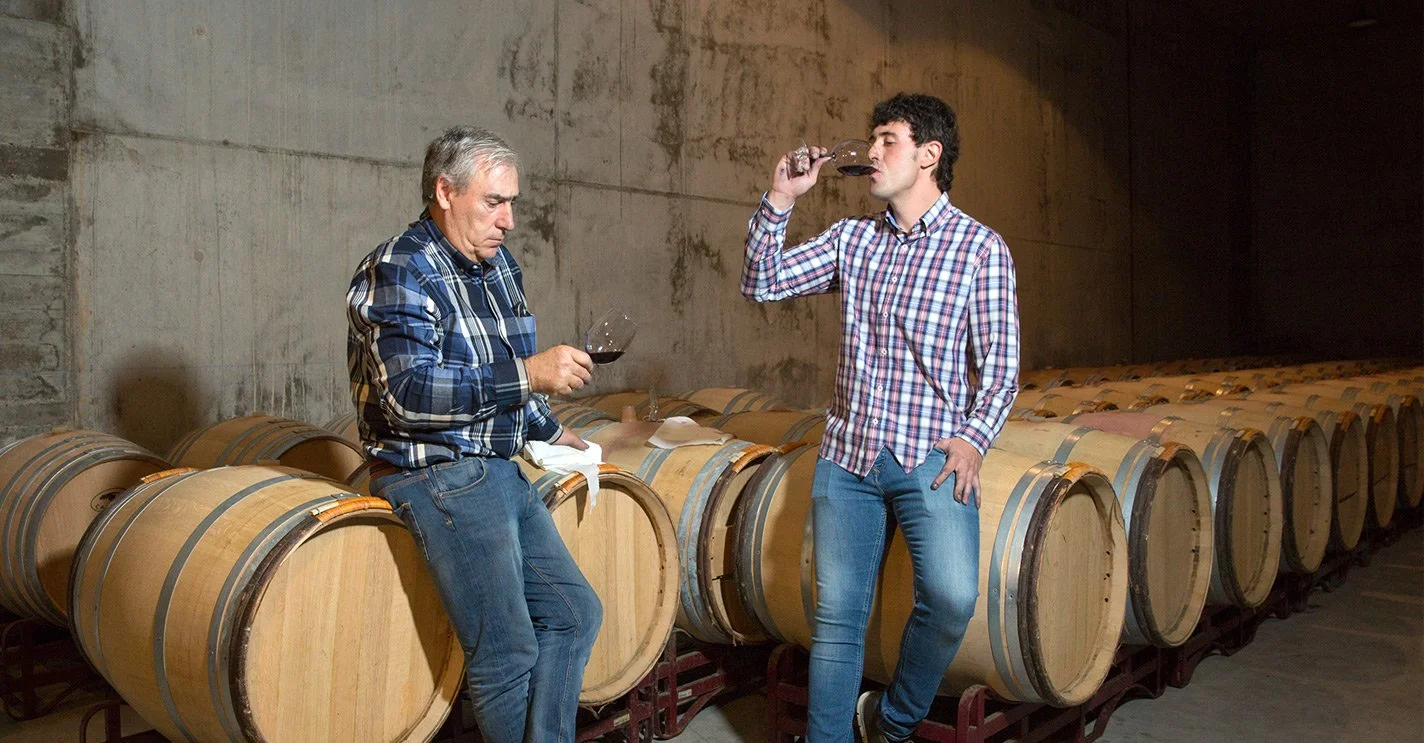
Javier recognized early that the exceptional vineyards surrounding Ábalos were the family's greatest asset. Together with his brothers, he began purchasing additional parcels around the village. As the brothers married and established families of their own, Javier ultimately took control of the winery they had shared, developing it into a modern family business while continuing his work in the vineyards.
"We understand that good wines are made in the vineyard, that's why we start the harvest in December, from pruning the vines, meticulously caring for our vines throughout the year, to obtain quality grapes that allow us to make special wines."

The Cosechero Tradition
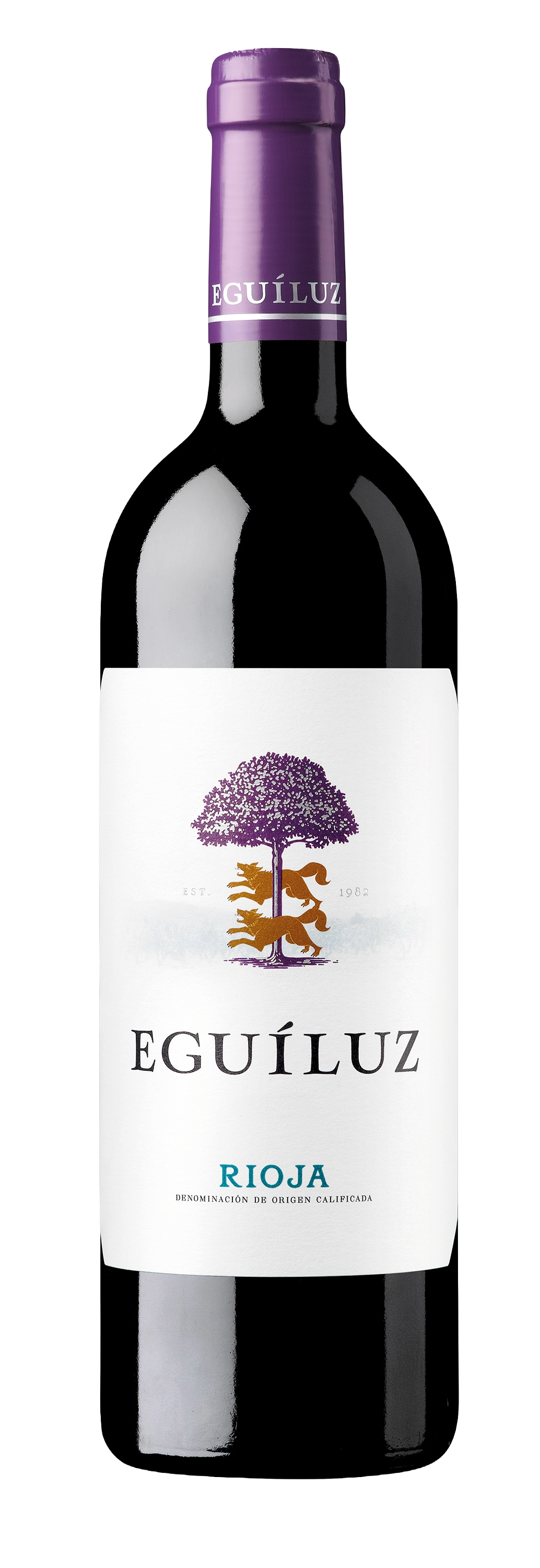
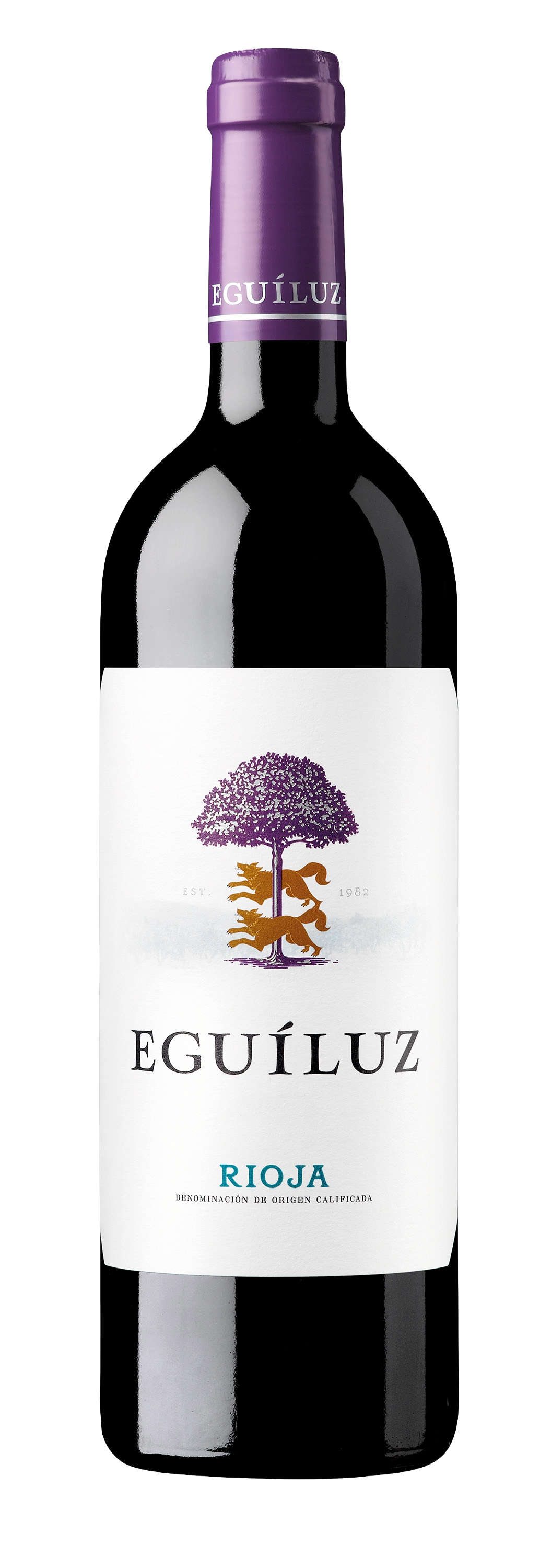
Eguíluz Joven is the clearest connection to that past, the family's best-selling flagship wine and a reference point for traditional carbonic maceration in the Sonsierra. It is the kind of wine still found by the glass in excellent pintxo bars and restaurants throughout the Basque Country, from Bilbao to San Sebastián and beyond.
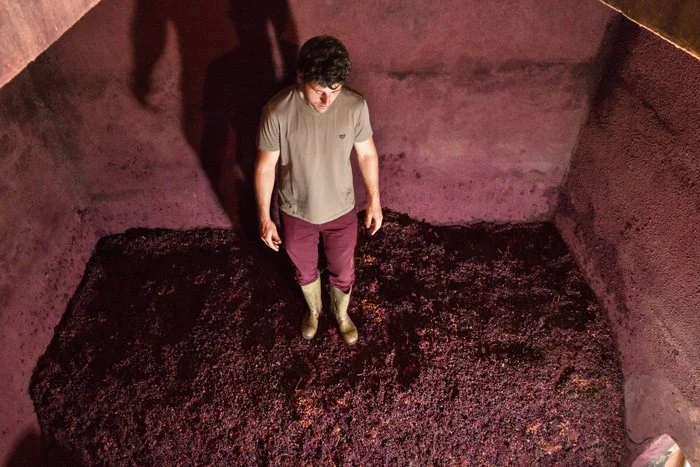
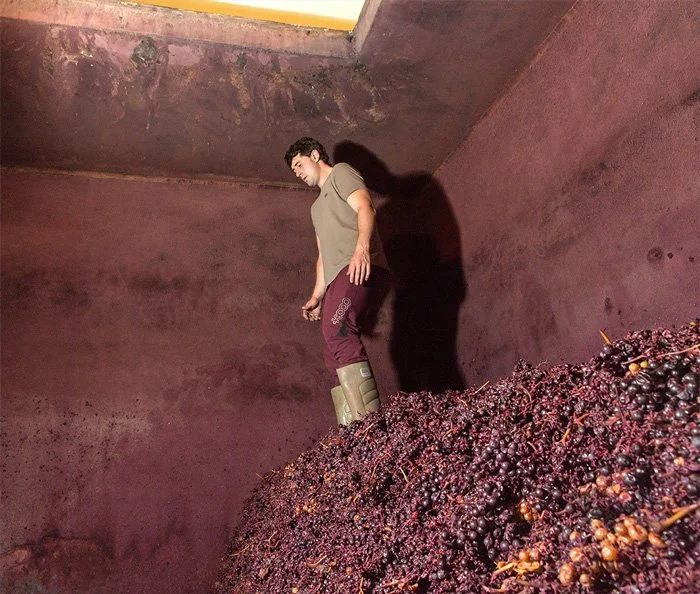
Made primarily from Tempranillo together with Viura and Garnacha, in proportions that vary according to the vintage, the wine comes from family vineyards in Ábalos and Labastida. Whole bunches are loaded by gravity into open concrete vats with the intention of keeping as many berries intact as possible. Once the initial intracellular fermentation has subsided, the grapes are trodden by foot, allowing for a gentler extraction than would be achieved through excessive mechanical pressure.
The method is a continuation of the type of winemaking practiced in the villages beneath the Sierra de Cantabria for generations. Eguíluz continues to work with open concrete lagares, whole bunches, gravity, and foot-treading because these traditional tools remain among the best ways for the family to preserve fruit, freshness, and the character of the harvest without unnecessary manipulation.
The scale of the process makes Israel's selection particularly striking. Approximately 25,000 kilograms of grapes are loaded into each concrete vat, producing roughly 17,000 liters of wine. From that, only around 8,000 liters from the heart of the vat are selected for the Eguíluz Rioja Joven bottling. The resulting wine is generous and immediate, full of fresh fruit and refreshing acidity, with a natural balance that makes it remarkably easy to drink. Yet there is real discipline behind its apparent simplicity.
The wine has long enjoyed a loyal following throughout the Basque Country, particularly in restaurants in Bilbao, San Sebastián, Vitoria, and the surrounding region. It is exactly the sort of wine the local cuisine asks for: fresh, lively, and convivial, equally comfortable on a restaurant table or alongside the region's chuletillas de cordero al sarmiento, small lamb chops grilled over coals made from pruned grapevine cuttings.
For Eguíluz, this is not an old style that needed to be replaced by something more ambitious. It remains a vital part of the identity of the estate.
The question Israel began asking was what else these same vineyards might be capable of saying.
Selección de Parcelas
That exploration has become the Selección de Parcelas, a collection built around the family's most distinctive vineyards.
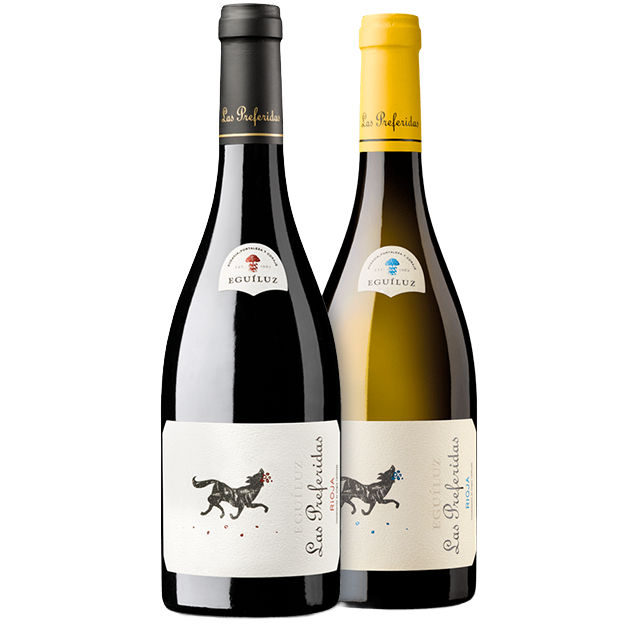
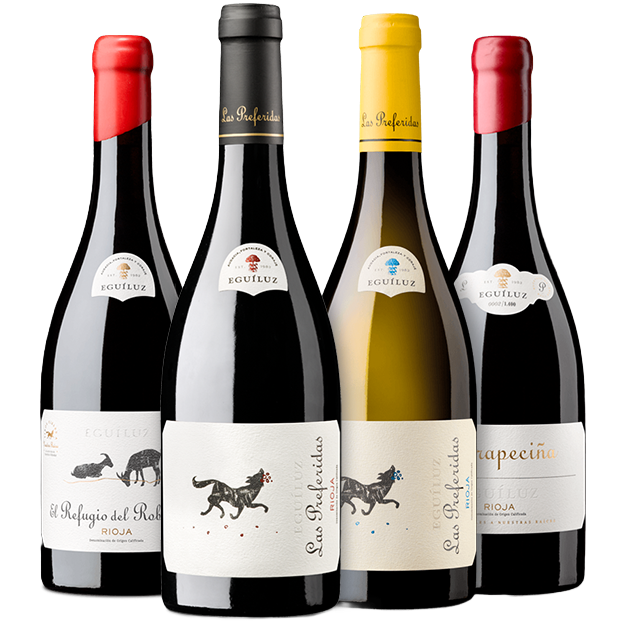
The range begins with Las Preferidas, literally “the preferred ones,” the family's selection from favored parcels across its holdings. Rather than representing a single vineyard, the wines bring together sites that Israel believes best express the high, cool slopes surrounding Ábalos, functioning in many ways like village-level Premier Cru selections.
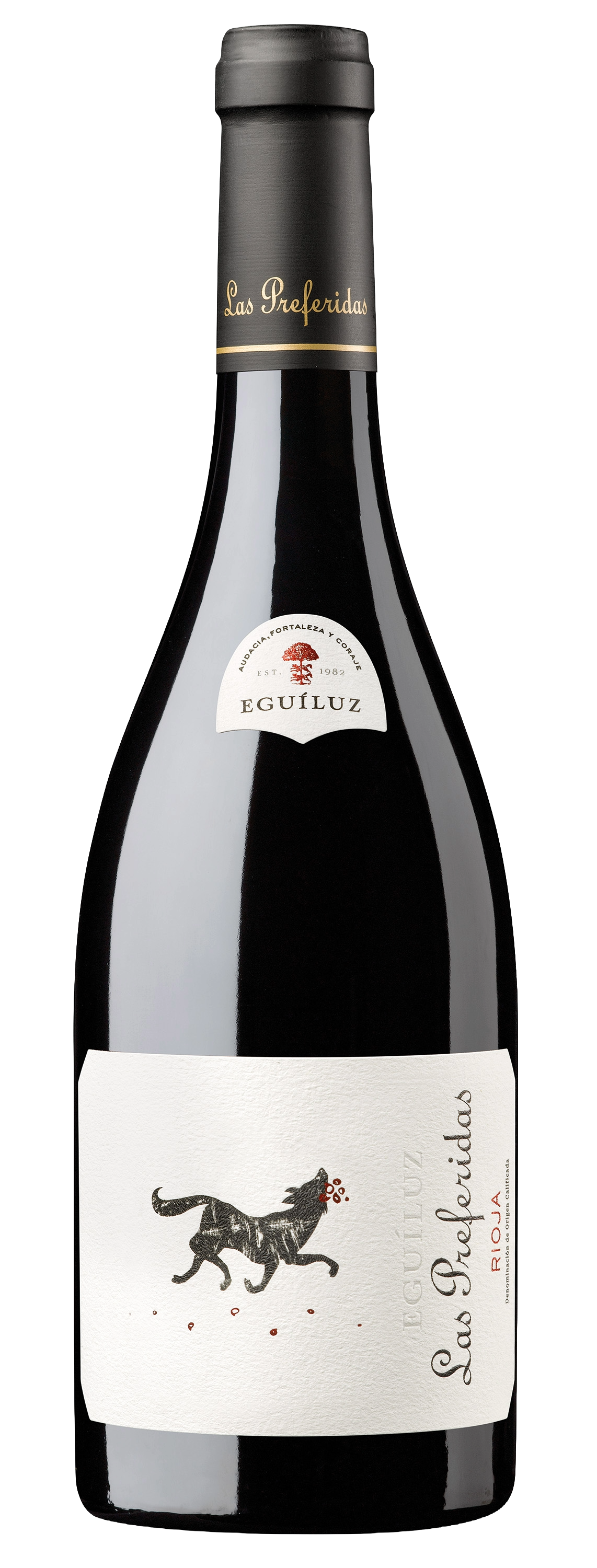
Las Preferidas Tinto is based on approximately 90% Tempranillo with 10% Garnacha, Viura, and Calagraño, with the precise proportions changing according to the vintage. Fruit is selected from three vineyards in Ábalos and one in Labastida, bringing together the family's holdings on both sides of the political boundary between La Rioja and Álava. The sites reach into the higher elevations beneath the Sierra, including vineyards around 650 meters, where cooler conditions, poor soils, and Atlantic influence help preserve freshness.
The winemaking remains closely connected to the traditional methods used for Eguíluz Joven: whole bunches, open concrete lagares, gravity filling, foot-treading, and gentle extraction. The difference lies in selection and intent. Here, those techniques are used not simply to preserve the exuberant fruit associated with carbonic maceration, but to articulate a more structured village-level expression of the family's vineyards.
Las Preferidas Tinto is succulent, youthful, and stylish, with tangy licorice, bramble, and black cherry fruit framed by fine, lacy tannins. It is immediately pleasurable in its youth while possessing the structure and balance to develop beautifully in bottle.
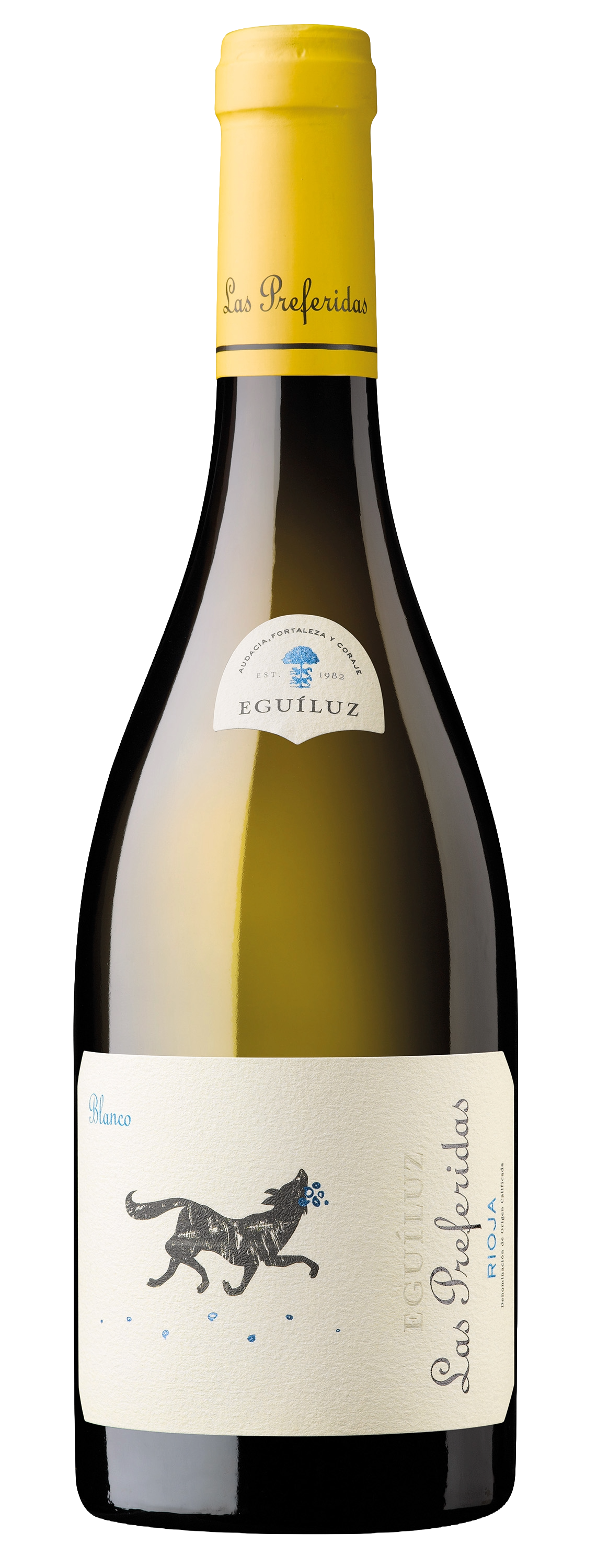
Las Preferidas Blanco was the first white wine produced by Bodegas Eguíluz, beginning with the 2023 vintage, and reaches even further into an old Rioja vineyard tradition. Historically, white varieties were often planted at the heads of rows and along the upper portions of slopes, places with poorer, shallower soils where vigor was naturally restricted. Eguíluz selects old vines from four parcels in Ábalos, and one parcel of Garnacha Blanca in Labastida, producing the wine primarily from approximately 85% Viura and 15% Garnacha Blanca.
Las Preferidas Blanco made an immediate impression, a wine of outstanding depth and structure with immediate appeal that should continue to gain complexity in bottle. Comparisons with Premier Cru Chablis are easy to draw, particularly due to its calcareous nature with a combination of concentration, mineral tension, and freshness; underlining the remarkable aging potential of the bottling.
What appears at first to be a new direction for the winery is, in fact, another act of recovery: bringing the native white grapes of Rioja into sharper focus within the range and recognizing their historic place within the vineyards of Ábalos. Las Preferidas Blanco has the potential to become one of the defining white wines of the region.
Above Las Preferidas sit two individual vineyard expressions.
Vineyards & Philosophy
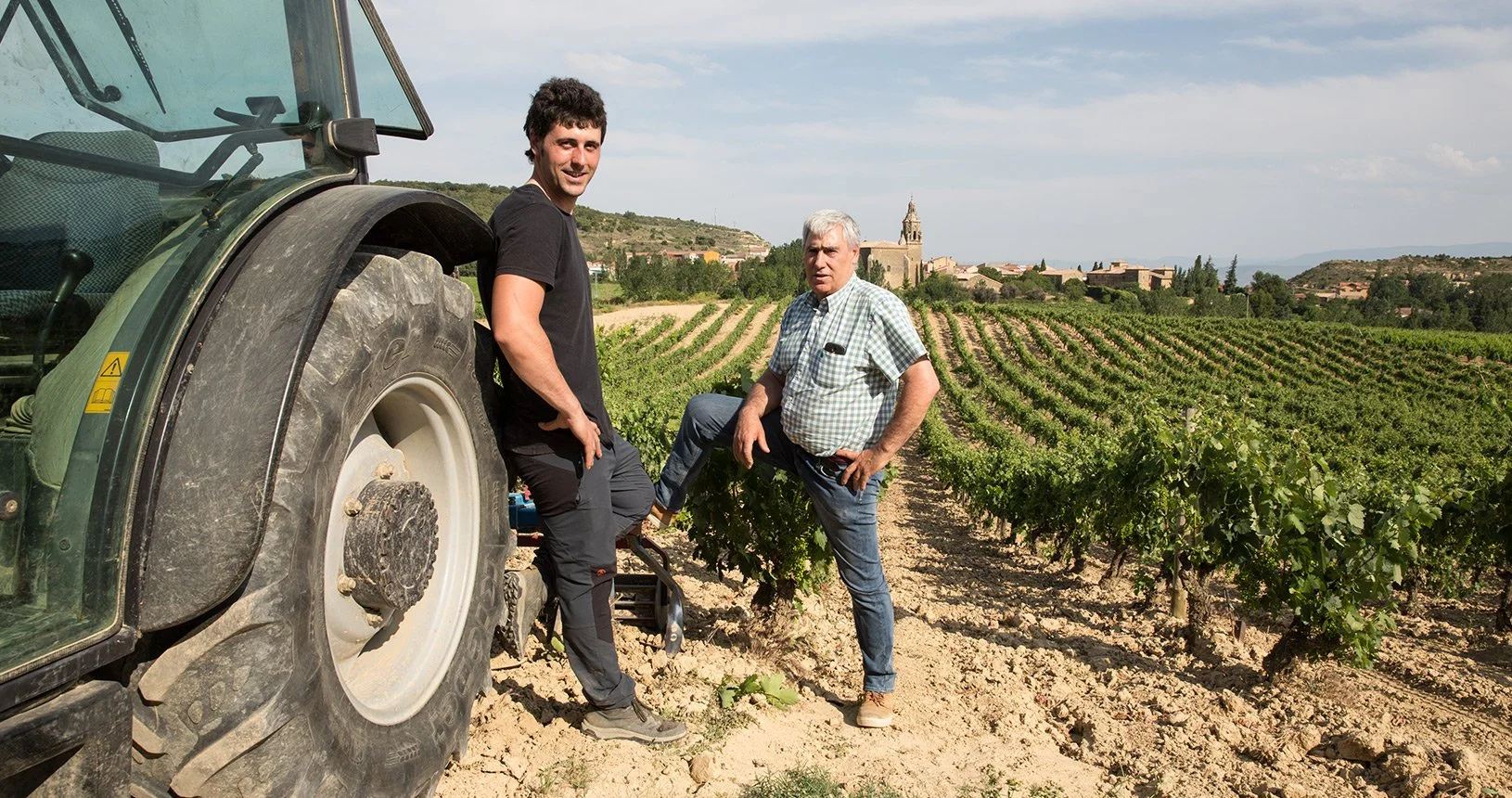
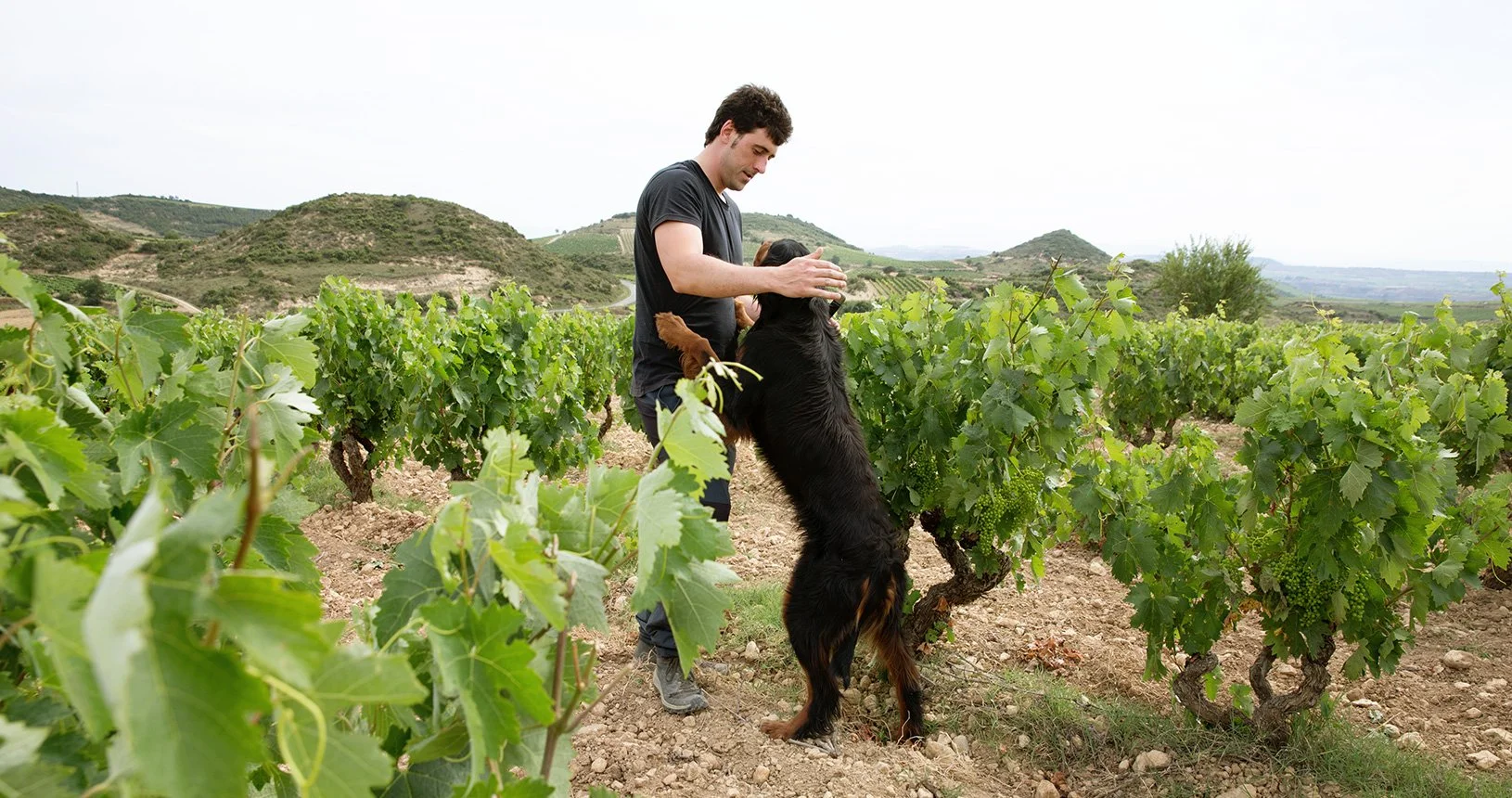
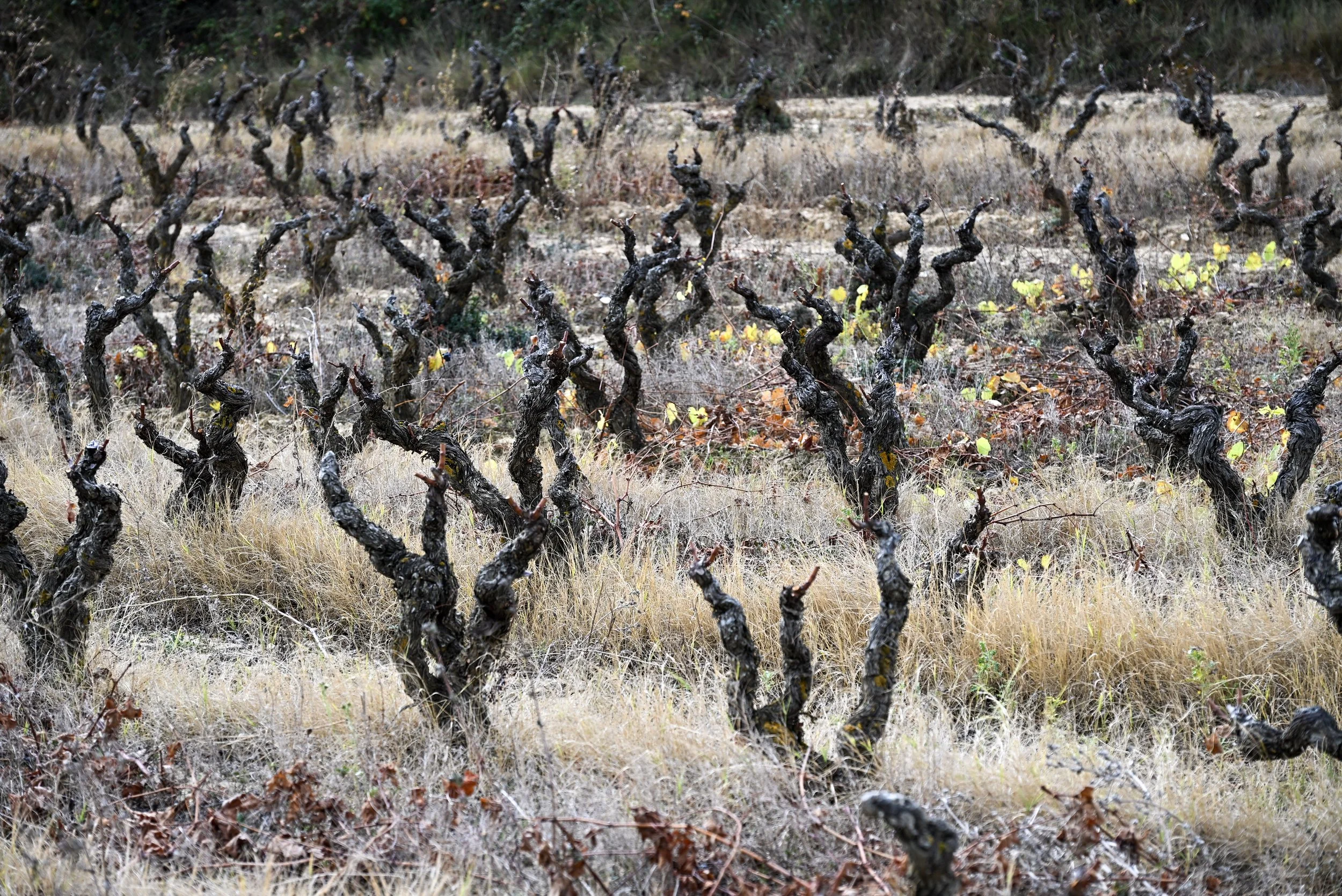
Today, Javier works the vineyards alongside his son Israel, who has assumed responsibility for winemaking, while Javier's wife, Blanca, oversees administration. The family currently farms 22 hectares, including 14 hectares in Ábalos and an additional eight hectares in neighboring Labastida. Their vines were planted between 1941 and 2007, with the majority dating from the 1970s and 1980s. Tempranillo dominates the holdings, while traditional varieties including Garnacha, Garnacha Blanca, Viura, and Calagraño are preserved and increasingly replanted in vineyards where the family believes they are best suited.
An industrial engineer by training, Israel Eguíluz initially followed a path outside the winery before recognizing that his real interest lay in continuing his father's work. He returned to Ábalos, pursued further studies in oenology, and joined Javier in the vineyards and cellar in 2015.
"It is precisely the family character that is one of the main sources of value of our winery"
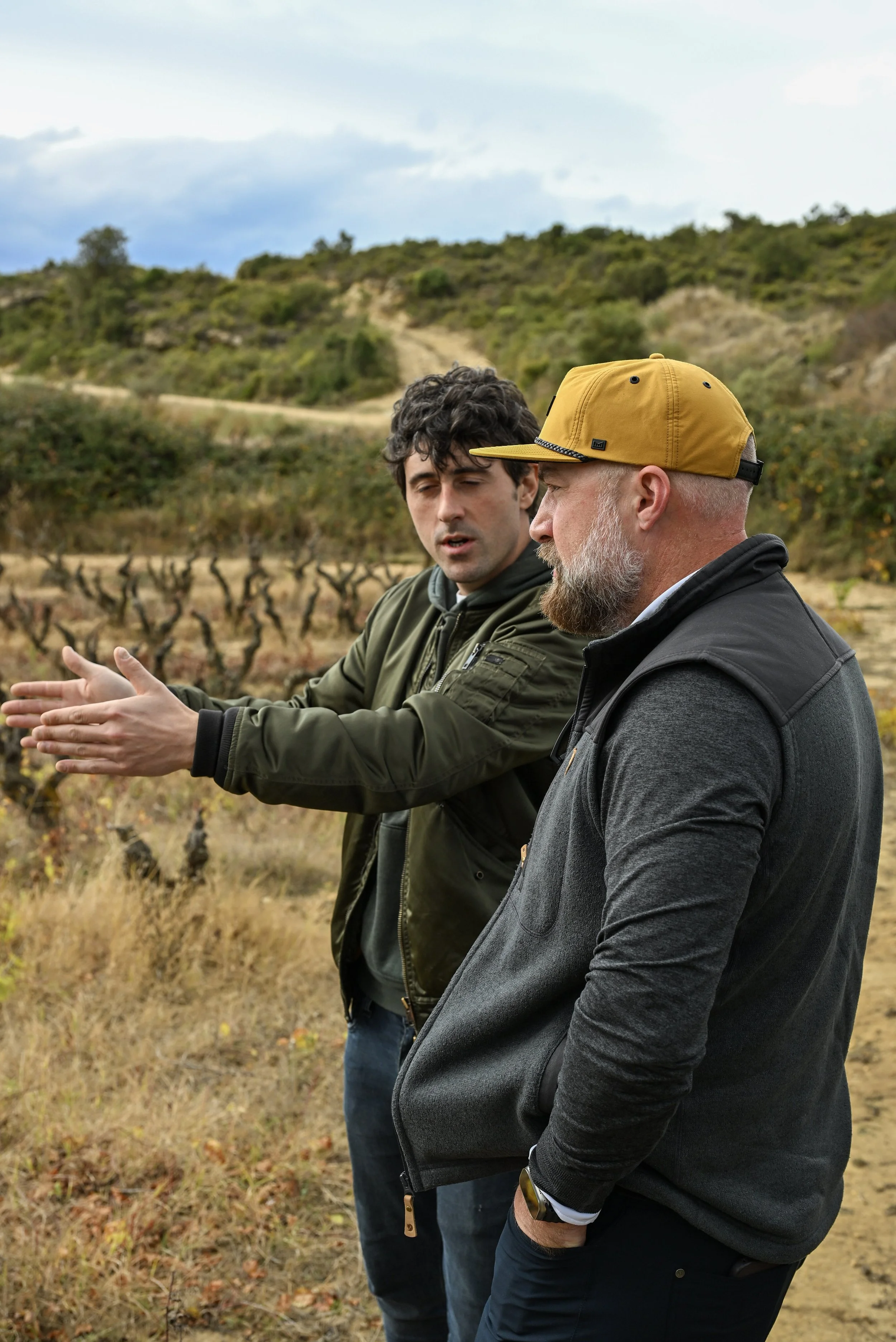
Father and son share the conviction that the quality of a wine begins in the vineyard and that the role of the cellar is largely to preserve what the land has already given them. Their approach is deliberately low-intervention, but it is not based on ideology. It grows from generations of practical knowledge and from a desire to make wines immediately recognizable as wines of the Sonsierra.
“We try not to be influenced by trends. We strive to make authentic wines that retain their typicity and reflect their origin. We want anyone, anywhere in the world, to know without a doubt that our wine is a Rioja from the Sonsierra region."
The language of “vineyard-first” winemaking has become ubiquitous, but at estates such as Eguíluz it is not a slogan. It is in their marrow and forms the foundation of their work. Their lives are organized around the vineyard calendar, and their understanding of wine begins with the accumulated experience of farming these places year after year.
As the current winemaker and next generation of the family business, Israel has gradually changed the trajectory of the winery from a primary focus on Rioja’s traditional age-designated categories of Crianza, Reserva, and Gran Reserva toward vineyard-specific wines that reveal the exceptional terroir of Ábalos with greater precision.
Importantly, he has not abandoned the traditional cosechero wines that form the foundation of the estate and remain an essential part of the family's history. Instead, Eguíluz is working to make the finest possible expression of this traditional style, hand-harvesting fruit from Ábalos and Labastida and continuing to crush grapes by foot, while simultaneously separating the family's most exceptional parcels into a village-and-vineyard hierarchy.
“Our goal is to produce wines that are true to our roots, authentic wines with soul, that represent the typicality of an area historically and vocationally dedicated to wine”
The evolution at Eguíluz is therefore not a rejection of the family's past. The traditional wines and the parcel wines exist alongside one another as two expressions of the same landscape and the same inherited culture.
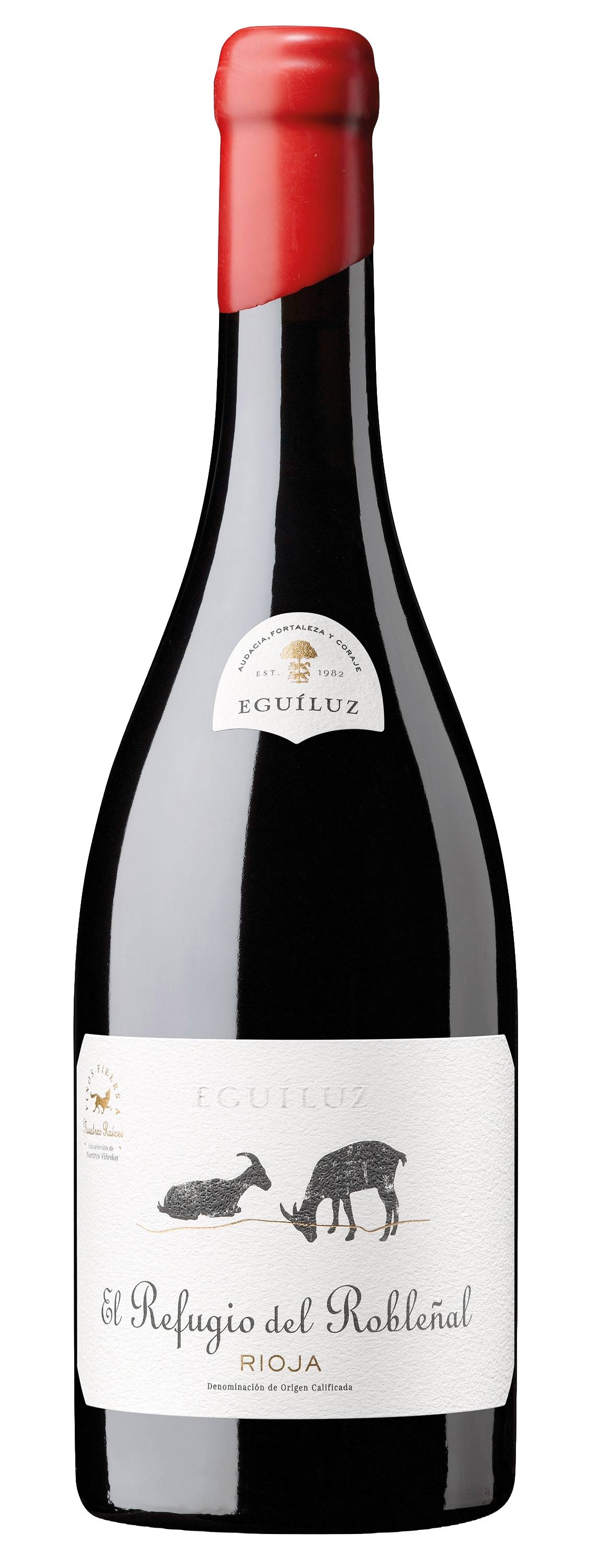
El Refugio del Robleñal
El Refugio del Robleñal comes from a top 0.5-hectare parcel called Las Cabritas in the El Robleñal paraje of Ábalos. The Tempranillo vines were planted in 1985 and are bush-trained on poor, shallow clay-limestone soils at 537 meters. Naturally low vigor and low yields concentrate the fruit, which is harvested entirely by hand. The greatness of the parcel is apparent in this bottling, which announces itself with a beautiful perfume and lacy structure, and long finish found only in the top wines of the region. Robleñal is all about sophistication and grace.
The wine is a classic Sonsierra expression, combining fresh fruit and a beautifully perfumed nose with deep crimson color, fine-grained tannins, black cherry and plum, and a long, savory, acid-driven finish.
Its name comes directly from the life of the place. The vineyard contains an area where goats grazing the family's land traditionally took shelter, sometimes remaining there for days at a time. For the Eguíluz family, this is a familiar landmark rather than an invented vineyard story, part of the accumulated memory of working the same landscape over generations.
That relationship between vineyard and memory is central to the parcel wines. Their significance is not simply that they are smaller-production or more expensive bottlings. They give names to places the family has known, worked, and understood for years.
Carrapeciña
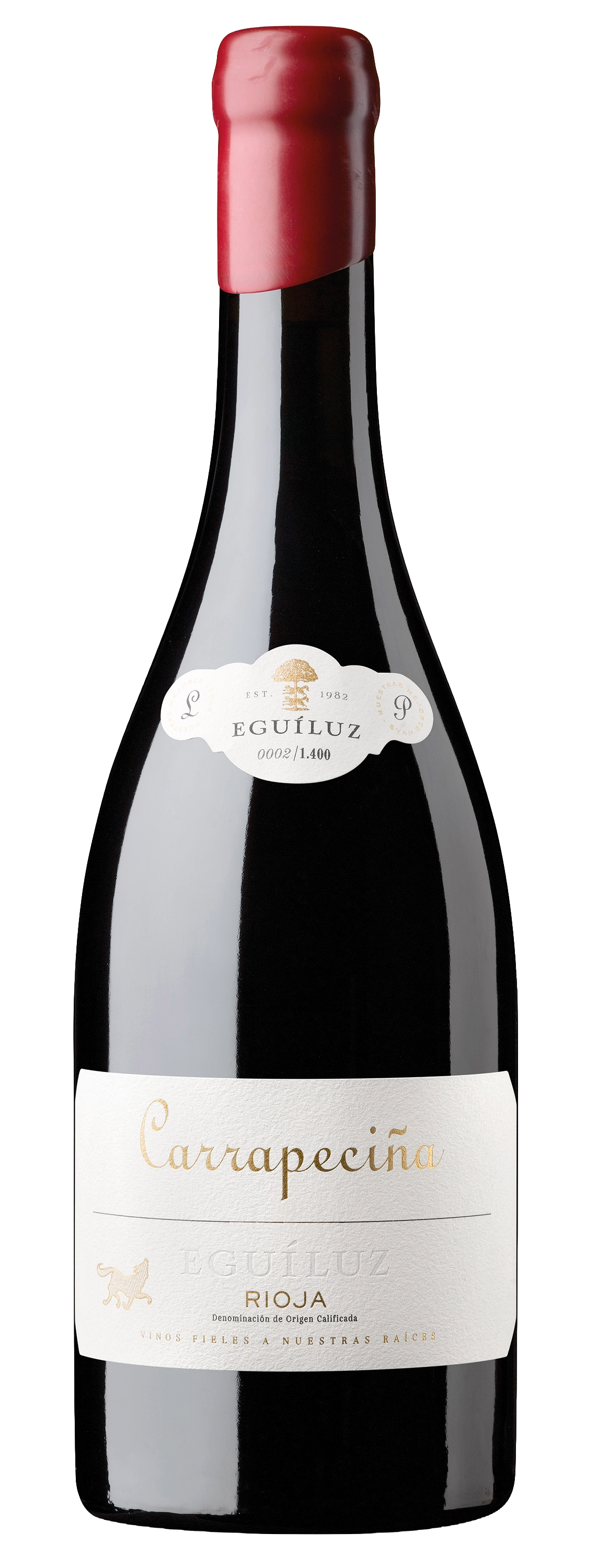
At the top of the range is Carrapeciña, the family's most profound interpretation of Ábalos to date.
The wine comes from three contiguous parcels totaling 2.5 hectares in one of the higher, cooler parts of the village, close to the edge of the Sierra. Planted between 1986 and 1993 at approximately 603 meters, the vineyards combine traditional bush vines with trellised plantings on clay-limestone soils. Harvesting is manual, with additional selection from the poorer sections of the parcels. Carrapeciña is 100% Tempranillo.
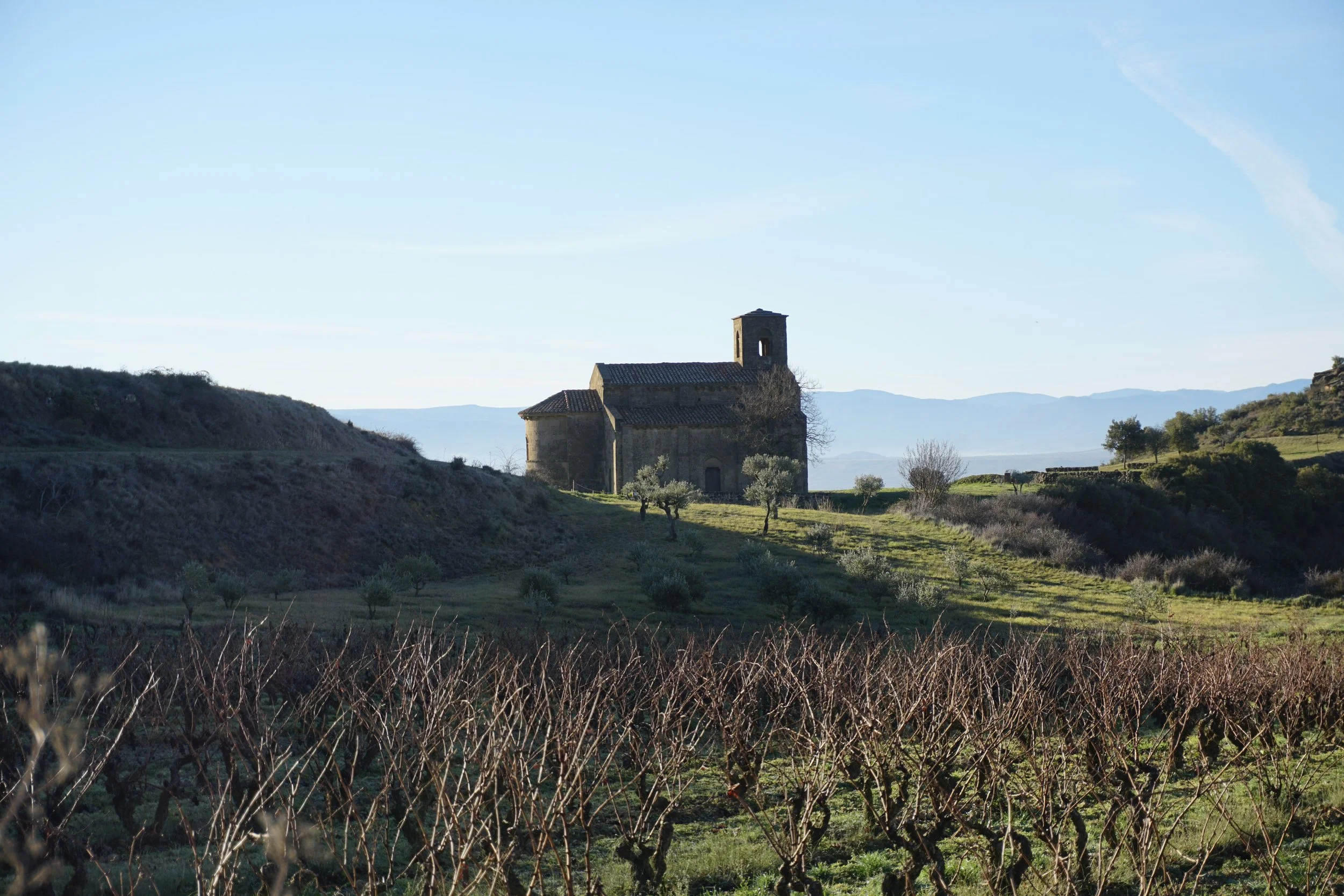
The name Carrapeciña derives from the old road toward the mountain village of Peciña. The vineyards lie along a historic route climbing away from Ábalos toward the tiny village of Peciña and the archaeological landscape surrounding Santa María de la Piscina. Perched on a hill between Peciña, Ábalos, and San Vicente, the site includes a remarkably well-preserved Romanesque church, a rock-cut necropolis, the remains of a medieval settlement, and defensive structures. Burials in the area have been dated to the tenth century, while the present church was consecrated in 1137.
It is an extraordinary setting for a vineyard, but also an instructive one. Carrapeciña occupies a landscape in which vineyards, roads, villages, religious sites, and human settlement have overlapped for centuries. Looking west toward San Vicente, east toward Labastida, and back toward Ábalos, it sits within one of the great vineyard corridors of the Sonsierra.
The wine reflects the seriousness of the place. Carrapeciña has the concentration expected from Tempranillo here, but its identity lies just as much in freshness and definition. Dark bramble and black cherry fruit are joined by floral lift, fine tannins, stony tension, and restrained oak. For us, it is the closest Eguíluz comes to a Grand Cru idea, not because Rioja formally uses that language, but because the wine makes the argument that one particular place deserves to be understood on its own.
Looking Forward by Looking More Closely
There is a temptation to describe estates such as Eguíluz simply as part of a “new Rioja.” That misses what makes the project interesting. The story is deeper and the evolution considerably more nuanced.
The family has farmed Ábalos for generations. Javier built his winery around the cosechero traditions of his village. They still work with whole bunches, concrete lagares, carbonic maceration, and foot-treading. Las Preferidas Blanco grows from the old practice of planting white grapes in the poorest upper sections of vineyards. El Refugio del Robleñal takes its name from the movement of livestock through the family's land. Carrapeciña follows an ancient road toward a medieval village and a Romanesque church. Even the increasingly fashionable idea of identifying individual vineyards is, at its core, simply a more precise way of paying attention to places the family has always known.
What has changed is the resolution of the focus.
Rather than a revolution, the evolution at Eguíluz is more like an image gradually coming into sharper definition. Israel's generation is looking at inherited vineyards more closely, separating sites that were once blended together, asking why one slope behaves differently from another, and allowing individual parcels to speak with greater clarity. The ambition has increased, but the reference point has remained to bring out the best Ábalos and the Sonsierra has to offer.
Israel has already attracted significant critical attention for that work and was singled out in Tim Atkin MW's 2026 Rioja Special Report as Young Winemaker of the Year. But the more meaningful story is visible in the wines themselves.
The humble Joven and the limited Carrapeciña may sit at opposite ends of the range, yet they come from the same family, the same methods, and the same landscape. One preserves the everyday wine culture of the Sonsierra. The other examines one small piece of that landscape in extraordinary detail.
Together, they tell the story of Ábalos: past, present, and future, all in the same conversation.
The Wines of Eguíluz